Linux History: The Complete Evolution of the Linux Operating System
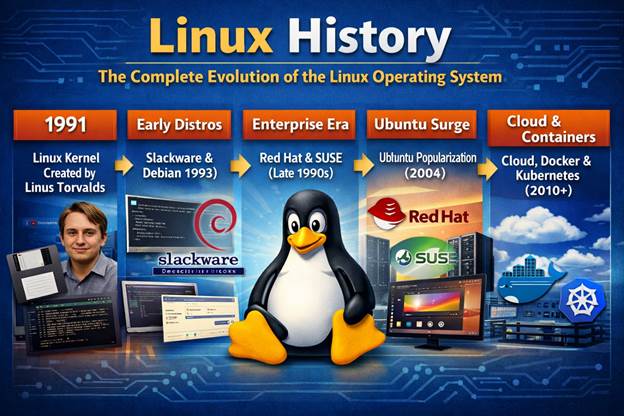
Linux is one of the most influential operating systems ever created. It started as a small student project in 1991, but Linux has developed into a giant operating system. Today, it powers servers, cloud infrastructure, supercomputers, smartphones, and even space technology.
Unlike Windows, Linux is open source, meaning anyone can freely study, modify, and distribute its code. This philosophy has helped Linux grow into a global collaborative project involving thousands of developers.
In this article, we explore the complete history of Linux, including its origins, major milestones, popular distributions, and its enormous impact on modern technology.
The Origins of Linux: From a Student Project to a Global Movement
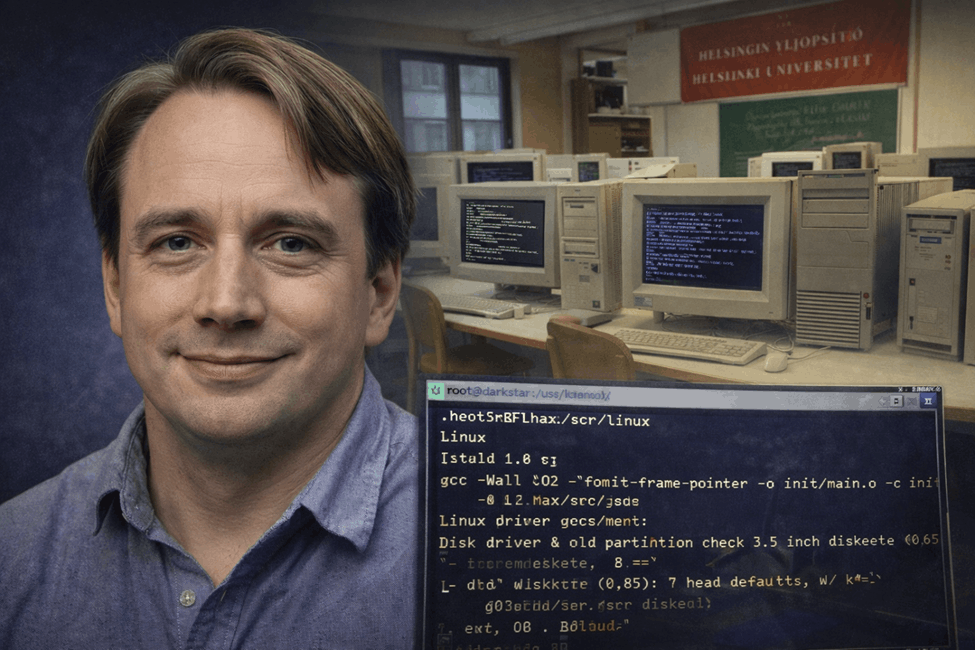
The story of Linux began in 1991, when Finnish computer science student Linus Torvalds started working on a new operating system kernel.
At the time, Torvalds was using MINIX, a small Unix-like operating system created for educational purposes. However, MINIX had limitations and restrictions that frustrated developers who wanted more control.
Torvalds decided that it was time to develop his own operating system that would be easier and more comfortable to use.
On August 25, 1991, he posted a message on the Usenet newsgroup comp.os.minix announcing the project:
“I’m doing a free operating system (just a hobby, won’t be big and professional like GNU)."
Ironically, that small “hobby" project would later become one of the most important technologies in the world. In this case, a hobby became more than just a lifestyle.
The first version, Linux Kernel 0.01, was released in September 1991.
Although extremely basic, it already included essential features such as:
- Multitasking
- File system management
- Hardware communication
- Process scheduling
What made Linux unique was that Torvalds released it under an open development model, allowing programmers worldwide to contribute improvements.
This decision shaped Linux’s future success.
The Rise of Open Source and the GNU Connection

Although the Linux kernel was revolutionary, it was only one piece of a full operating system.
To become a complete system, Linux combined with software from the GNU Project, created by Richard Stallman in the 1980s.
GNU had already developed many essential tools, including:
- Bash shell
- GNU Compiler Collection (GCC)
- Core utilities
- File management tools
When combined with the Linux kernel, these components created a full operating system often referred to as GNU/Linux.
This partnership helped establish the free and open-source software movement, which emphasized:
- Software freedom
- Transparency
- Community collaboration
- Shared innovation
No one could predict such rapid improvement in open-source programs, but Linux quickly attracted developers, researchers, and universities interested in open computing platforms.
Early Linux Distributions: Making Linux Accessible
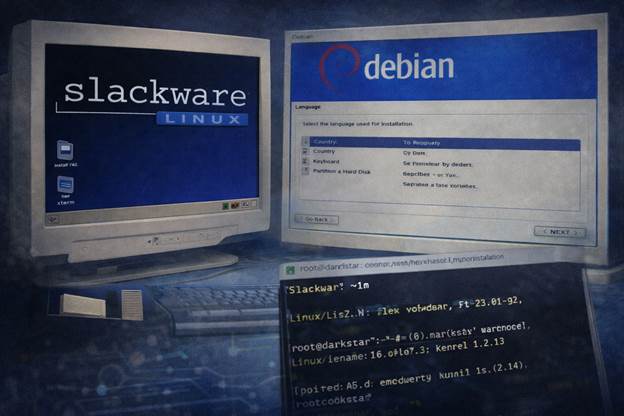
In the early 1990s, installing Linux was complicated. Users needed to manually compile software and configure system components. For this, professional qualifications were required. As a result, developers decided to create Linux distributions (distros).
A distribution packages the Linux kernel with additional software, drivers, and user interfaces.
Some of the earliest distributions included:
Slackware (1993)
Slackware is one of the oldest surviving Linux distributions. It focused on simplicity and stability, appealing to advanced users.
Debian (1993)
Debian introduced a powerful package management system that allowed users to easily install and update software.
Debian later became the foundation for many modern distributions.
Red Hat Linux (1994)
Red Hat played a major role in bringing Linux into the business world. It later evolved into Red Hat Enterprise Linux (RHEL).
These early distributions helped Linux become more accessible and easier to install.
Linux Enters the Enterprise World

During the late 1990s and early 2000s, Linux began gaining attention from large companies and enterprises. Not only developers found the OS suitable, but major technology companies also started paying attention to it.
Businesses realized Linux offered several advantages:
- Lower licensing costs
- Strong security
- Stability for servers
- High customization
Major technology companies started investing heavily in Linux.
Companies such as:
- IBM
- Intel
- HP
- Oracle
all began supporting Linux development.
By the early 2000s, Linux had become one of the dominant server operating systems on the internet.
Many major websites and online services began running their infrastructure on Linux servers.
The Rise of Ubuntu and Desktop Linux
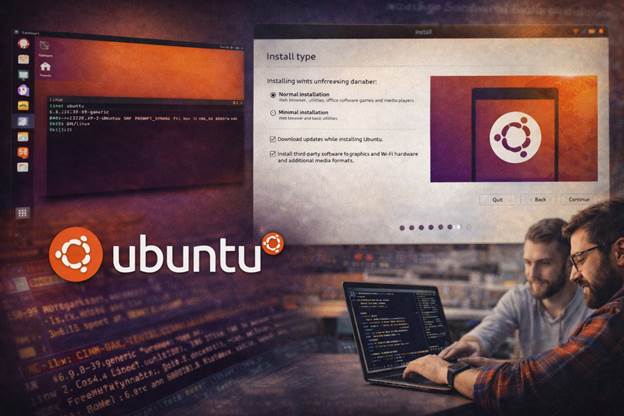
In 2004, a new Linux distribution changed the desktop landscape: Ubuntu.
Created by Mark Shuttleworth, Ubuntu aimed to make Linux easy for everyday users.
Ubuntu introduced several improvements:
- Simple installation
- User-friendly interface
- Regular updates
- Strong community support
Ubuntu quickly became one of the most popular Linux distributions.
It also inspired many derivatives, including:
- Linux Mint
- Pop!_OS
- Elementary OS
- Zorin OS
These distributions focused on creating desktop experiences that could compete with Windows and macOS.
Linux Dominates Servers, Cloud Computing, and Supercomputers
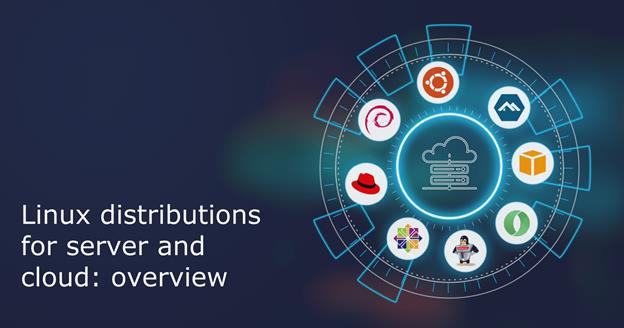
Today Linux dominates modern computing infrastructure.
According to industry reports:
- Over 90% of cloud servers run Linux
- All top 500 supercomputers run Linux
- Most internet infrastructure depends on Linux
Linux powers many technologies including:
- Cloud platforms (AWS, Google Cloud, Azure)
- Container systems (Docker, Kubernetes)
- DevOps infrastructure
- AI and machine learning systems
Its scalability and performance make it ideal for large-scale computing environments.
Linux in Mobile Devices and Embedded Systems

Many people use Linux every day without realizing it.
The most popular mobile operating system in the world, Android, is based on the Linux kernel.
Linux also powers:
- Smart TVs
- Routers
- IoT devices
- Automotive systems
- Industrial machines
Because Linux can run on small hardware systems, it is ideal for embedded computing environments.
Linux Today: A Foundation of Modern Technology
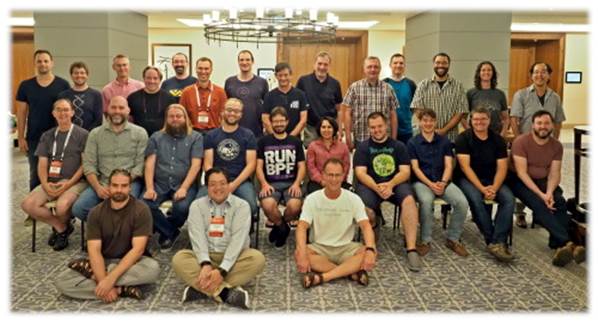
Today Linux is no longer just a niche operating system.
It is the foundation of modern digital infrastructure.
Linux drives innovation in areas such as:
- Artificial intelligence
- Blockchain technology
- Cybersecurity
- Cloud computing
- High-performance computing
Thousands of developers continue improving Linux every day.
Major companies such as Google, Microsoft, Meta, Amazon, and IBM contribute to Linux development.
The Linux kernel continues evolving with regular releases that improve performance, security, and hardware compatibility.
Why Linux Became So Successful
Several factors explain Linux’s incredible growth:
Open Source Development
Anyone can contribute to Linux development, leading to rapid innovation.
Stability and Security
Linux systems are known for reliability and strong security features.
Flexibility and Customization
Users can customize Linux for desktops, servers, or embedded devices.
Massive Community Support
Millions of developers worldwide support Linux.
The Future of Linux
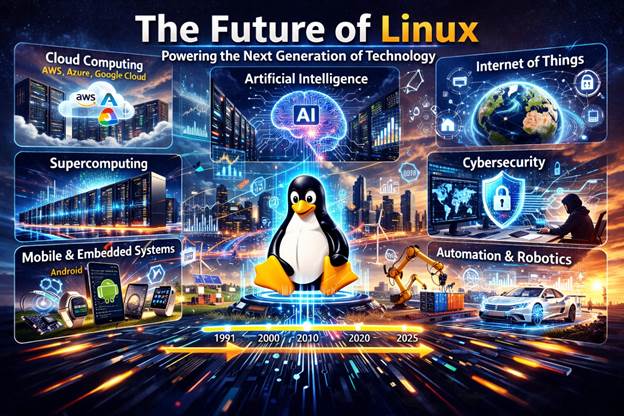
Linux is expected to remain central to future technologies.
Key areas where Linux will likely expand include:
- Artificial intelligence infrastructure
- Edge computing
- Autonomous vehicles
- Internet of Things
- Quantum computing research
As technology evolves, Linux will continue serving as a core platform for innovation.
Conclusion
From a small student project to a global technology powerhouse, Linux has transformed the computing world.
Its open-source philosophy enabled collaboration on a scale never seen before in software development.
Today Linux powers everything from smartphones and smart homes to cloud data centers and supercomputers.
With continuous development and a passionate global community, Linux will remain a cornerstone of modern computing for decades to come.