IBM History: The Complete Evolution of International Business Machines (1911–Today)
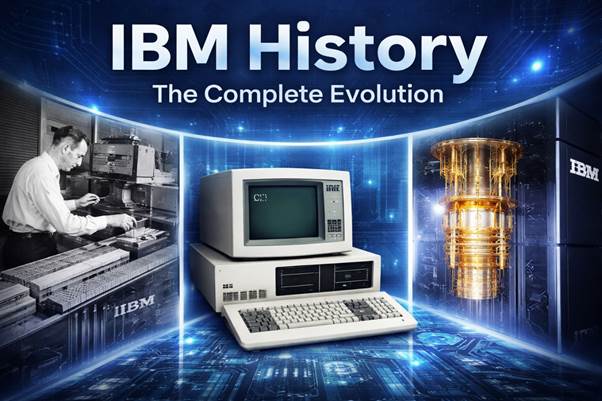
IBM is one of the most influential technology companies in the world. For more than a century, IBM has played a central role in shaping modern computing, from mechanical tabulating machines to advanced artificial intelligence and quantum computing systems.
Founded in 1911 and renamed IBM in 1924, the company helped build the foundations of enterprise computing, data processing, and modern information technology infrastructure. Throughout its long history, IBM has introduced innovations that changed how businesses, governments, and researchers handle data and technology.
From punch-card machines used in early statistical analysis to today’s cutting-edge hybrid cloud and AI platforms, IBM has consistently adapted to new technological eras. The company’s ability to evolve while continuing to innovate has made it one of the most respected technology organizations in the world.
This article explores the complete history of IBM, including its origins, major technological breakthroughs, and the role it continues to play in the future of computing.
The Origins of IBM: The Birth of a Computing Pioneer
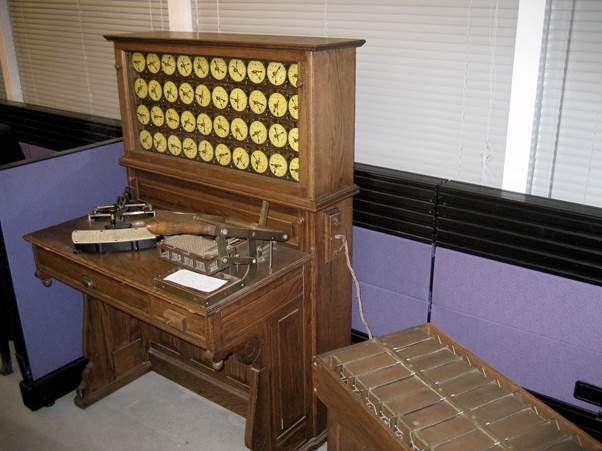
The roots of IBM date back to 1911, when financier Charles Ranlett Flint merged several technology and engineering companies to form the Computing-Tabulating-Recording Company (CTR).
CTR combined three businesses:
- Tabulating Machine Company
- International Time Recording Company
- Computing Scale Company of America
Each of these companies produced mechanical devices used for data processing, time tracking, and industrial measurement.
The most important technology came from the Tabulating Machine Company, which used punch-card systems invented by Herman Hollerith. Hollerith’s machines were first used in the 1890 United States Census, dramatically reducing the time required to analyze national population data.
Punch-card technology soon became the foundation of early automated data processing systems.
The Leadership of Thomas J. Watson Sr.
In 1914, business executive Thomas J. Watson Sr. joined CTR as president. His leadership transformed the company from a small manufacturing group into an international technology enterprise.
Watson emphasized:
- Customer service
- Employee training
- Long-term innovation
- Global business expansion
In 1924, CTR was renamed International Business Machines (IBM) to reflect the company’s growing presence in international markets.
IBM’s Growth During the Mechanical Computing Era (1920s–1940s)
During the 1920s and 1930s, IBM expanded rapidly by supplying punch-card tabulating systems to governments and large corporations.
These machines allowed organizations to process large datasets efficiently, making them essential tools for industries such as:
- Banking
- Insurance
- Manufacturing
- Government administration
Punch cards stored information using small holes punched into stiff paper cards. Machines could read these holes and process information automatically.
For decades, punch-card systems were the standard data storage method in computing.
IBM and World War II
During World War II, IBM technology played a role in military logistics and scientific research.
IBM equipment helped governments manage large-scale data processing tasks such as supply chain coordination, personnel management, and statistical analysis.
The wartime period accelerated the development of computing technologies and positioned IBM as a key technology provider for governments and research institutions.
The Rise of Electronic Computers and Mainframes (1950s–1960s)
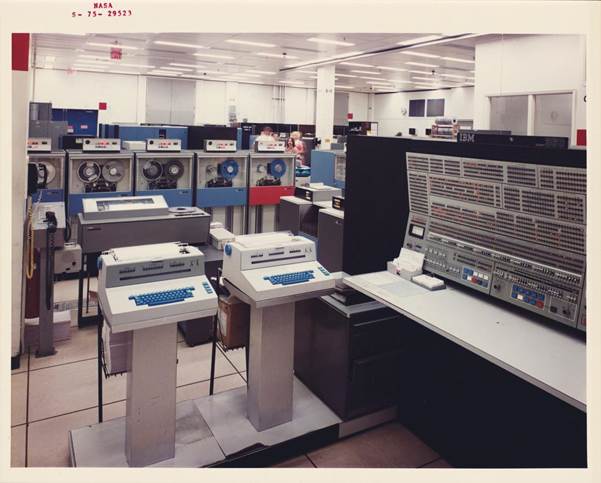
The 1950s marked a major shift in computing technology as mechanical machines were gradually replaced by electronic computers.
IBM invested heavily in research and engineering to develop powerful computing systems capable of performing complex calculations much faster than earlier machines.
One of IBM’s most significant breakthroughs was the IBM System/360, introduced in 1964.
The IBM System/360 Revolution (H3)
The System/360 was revolutionary because it created a compatible family of computers.
Businesses could purchase different models with varying levels of performance while running the same software.
Key innovations included:
- Standardized architecture
- Scalable hardware systems
- Long-term software compatibility
This concept transformed the computing industry and established IBM as the dominant computer manufacturer of the era.
By the late 1960s, IBM controlled nearly 70% of the global computer market.
The Birth of the Personal Computer: IBM PC (1980s)
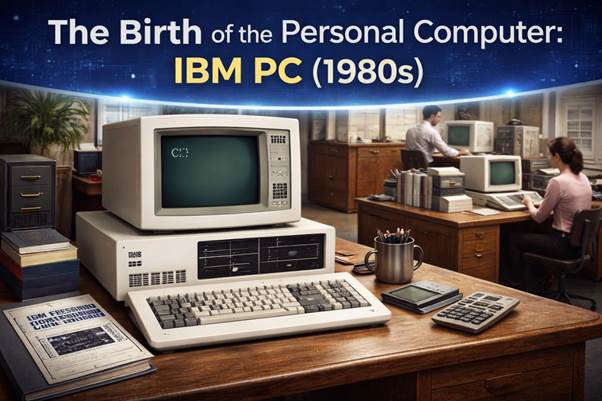
In 1981, IBM launched one of the most influential products in computing history — the IBM Personal Computer (IBM PC).
The IBM PC introduced an open architecture that allowed third-party manufacturers to develop compatible components and software.
The system ran on MS-DOS, developed by Microsoft.
Key features included:
- Intel microprocessors
- Expandable hardware architecture
- Standardized PC components
The IBM PC helped establish the modern personal computer industry.
However, the open architecture also allowed competitors to produce IBM-compatible computers, eventually reducing IBM’s dominance in the consumer PC market.
IBM’s Transition to Enterprise Services and Software (1990s–2000s)
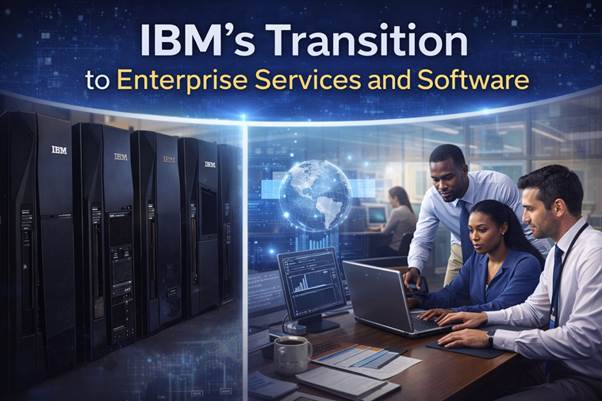
By the early 1990s, the personal computer market had become highly competitive. IBM responded by shifting its business strategy.
Under CEO Lou Gerstner, IBM transformed into a company focused on enterprise services, consulting, and software.
Major areas of focus included:
- IT consulting services
- Enterprise software solutions
- Infrastructure management
- cloud computing
In 2005, IBM sold its personal computer division to Lenovo.
This marked IBM’s exit from the consumer PC hardware market and allowed the company to concentrate on enterprise technology solutions.
IBM Research and Scientific Contributions
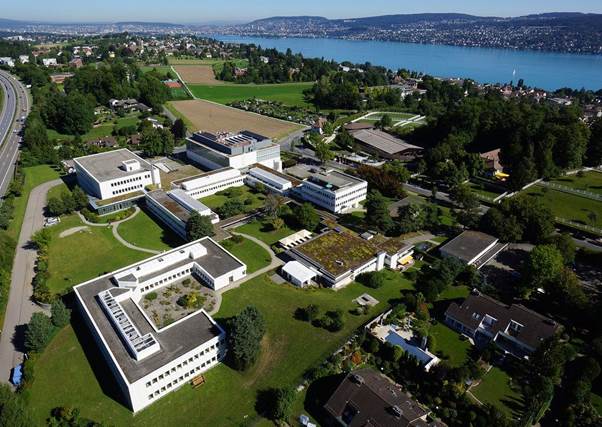
IBM Research has been one of the most influential industrial research organizations in the world.
IBM scientists have contributed to major breakthroughs in fields including:
- semiconductor physics
- data storage technology
- artificial intelligence
- quantum computing
IBM researchers have received multiple Nobel Prizes in Physics, demonstrating the company’s influence beyond the computer industry.
One of IBM’s most important research achievements was the scanning tunneling microscope, which allowed scientists to observe individual atoms for the first time.
IBM and the Development of Data Storage Technology
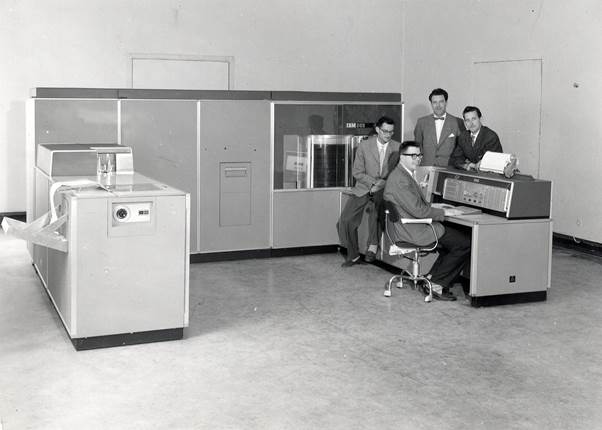
IBM played a central role in the evolution of modern data storage.
In 1956, IBM introduced the IBM 305 RAMAC, the world’s first commercial hard disk drive.
The system could store about 5 megabytes of data, which was revolutionary at the time.
Although the machine was physically enormous, it introduced the concept of random-access storage, allowing computers to retrieve information quickly without scanning entire datasets.
Modern hard drives and cloud storage systems are based on the same fundamental principles pioneered by IBM engineers.
IBM’s Role in Supercomputing
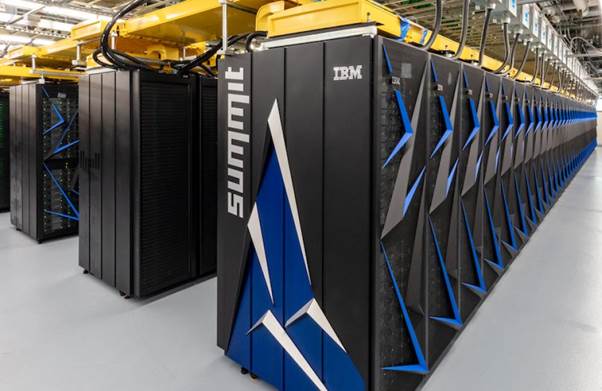
IBM has also played a major role in the development of supercomputers.
Supercomputers are designed to perform extremely complex calculations used in scientific research and engineering.
IBM created several notable systems including:
- Blue Gene
- Summit
These systems have been used for:
- climate modeling
- drug discovery
- astrophysics simulations
- pandemic research
IBM’s work in high-performance computing continues to support scientific advancements around the world.
Artificial Intelligence and the Watson Era (2010s) (H2)
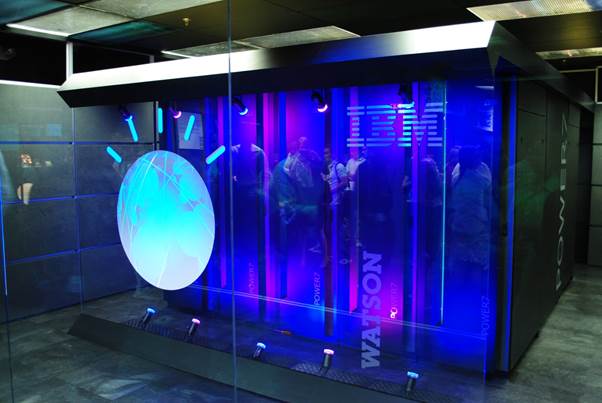
IBM entered a new technological era with the development of Watson, a powerful artificial intelligence system.
Watson gained worldwide attention in 2011 when it defeated human champions on the television quiz show Jeopardy!.
Watson demonstrated the ability to:
- understand natural language
- analyze massive datasets
- generate intelligent answers
Today, IBM applies Watson technology in healthcare, financial services, and enterprise analytics.
IBM in the Modern Technology Landscape (2020s–Today)
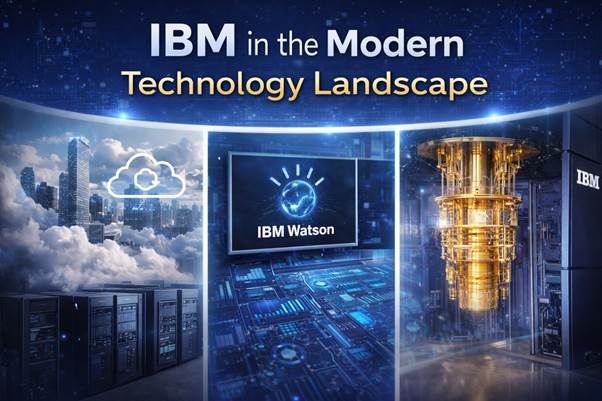
Today IBM focuses on advanced technologies that will shape the future of computing.
Hybrid Cloud Computing
IBM strengthened its cloud strategy by acquiring Red Hat in 2019.
Hybrid cloud systems allow businesses to combine public cloud infrastructure with private enterprise systems.
Quantum Computing
IBM is one of the global leaders in quantum computing research.
Quantum computers use qubits instead of traditional binary bits, enabling dramatically increased processing power.
These systems may eventually revolutionize fields such as cryptography, medicine, and materials science.
Major Innovations Introduced by IBM
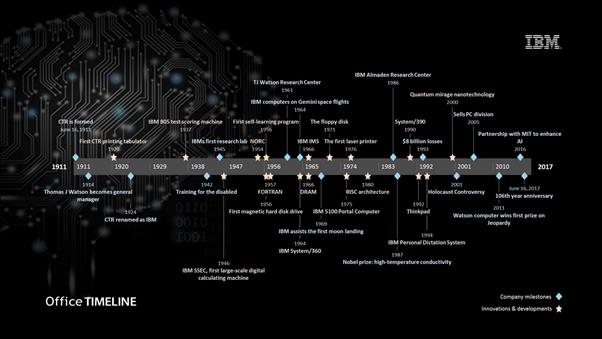
Throughout its history, IBM has introduced numerous groundbreaking technologies including:
- punch-card data processing systems
- mainframe computers
- the IBM PC
- relational databases
- artificial intelligence systems
- quantum computing research
IBM also holds one of the largest patent portfolios in the technology industry.