Google: The Complete History of the World’s Most Influential Technology Company – Part 1
Introduction to Google
What Is Google? (H3)
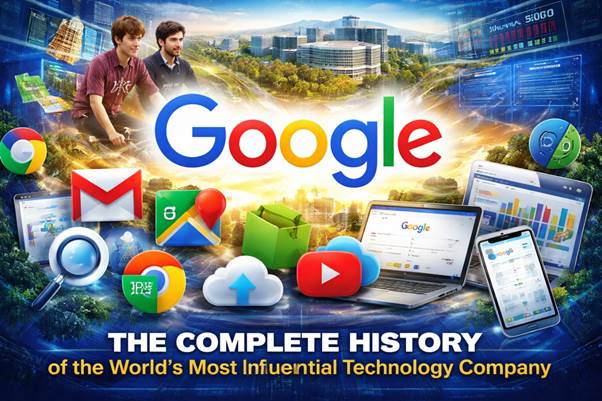
Google is one of the most powerful and influential technology companies in the world. Founded in 1998, the company started as a search engine designed to organize information on the rapidly growing internet. Today, Google operates a massive ecosystem of digital services including search technology, mobile operating systems, cloud infrastructure, artificial intelligence platforms, and productivity software.
At its core, Google’s mission is simple: to organize the world’s information and make it universally accessible and useful. This mission has guided the company’s development of technologies used by billions of people every day. From web searches and email communication to video streaming and navigation systems, Google services have become deeply integrated into modern life.
Google’s technological infrastructure relies on large data centers filled with advanced CPU clusters, high-performance processors, and enormous amounts of RAM. These systems process billions of search queries and store massive datasets that power services such as Gmail, Google Maps, and YouTube.
Over time, Google expanded beyond search to become a major competitor to companies like Microsoft, IBM, Oracle, and Intel. Its influence now spans mobile computing, artificial intelligence, programming platforms, and global internet infrastructure.
Why Google Became the Internet’s Gateway
Before Google existed, navigating the internet was far more difficult. Early search engines relied heavily on keyword matching and simple indexing systems, which often produced irrelevant or low-quality results. Users frequently struggled to find reliable information online.
Google introduced a revolutionary ranking algorithm known as PageRank. Instead of only analyzing keywords, the system evaluated links between websites to determine authority and relevance. This method dramatically improved search accuracy and quickly made Google the preferred search engine worldwide.
Another factor behind Google’s success was its simple interface. While competing websites were cluttered with banners and advertisements, Google offered a minimalist homepage centered around a single search bar. This clean design made the service faster and easier to use.
As internet usage increased and technologies evolved from early storage devices like floppy disks to portable media such as USB drives, Google positioned itself as the central gateway to online information.
Google’s Impact on Modern Digital Life (H3)
Google’s impact on society is enormous. The company provides tools used by students, researchers, businesses, and governments worldwide. Whether searching for knowledge, storing files in the cloud, or navigating cities with GPS technology, people rely on Google daily.
The company has also shaped the development of modern computing. Many web technologies, software frameworks, and programming tools used today were influenced by Google’s research and engineering efforts.
In addition, Google has invested heavily in Artificial Intelligence, machine learning, and large-scale data processing technologies. These innovations power features such as voice assistants, automatic translation systems, and personalized search results.
The Origins of Google (1995–1998)

Larry Page and Sergey Brin Meet at Stanford University
The story of Google began at Stanford University in 1995. Larry Page, a graduate student interested in data structures and information systems, met Sergey Brin, another computer science student specializing in mathematics and data mining.
Although their personalities initially clashed, the two quickly realized they shared similar interests in analyzing large datasets and improving internet search technology.
At the time, the internet was expanding rapidly, but search engines were inefficient. Page and Brin began researching ways to improve search accuracy by studying the structure of hyperlinks between websites.
The BackRub Research Project
Their research led to the development of a search engine prototype called BackRub. The system analyzed links between websites to determine which pages were more important.
Instead of relying solely on keyword frequency, BackRub evaluated how many sites linked to a page and how authoritative those linking sites were. This concept eventually became the basis for Google’s ranking technology.
BackRub ran on a cluster of servers built using affordable hardware components including standard processors, CPU units, and systems running the Linux operating system.
The Birth of the PageRank Algorithm
The most important innovation developed during this period was the PageRank algorithm. This mathematical formula evaluated website authority based on link relationships between pages.
By calculating these connections, the system could rank web pages according to relevance and credibility. This approach dramatically improved the quality of search results compared to earlier systems.
PageRank quickly proved more effective than existing search engine technologies.
The Decision to Create Google (H3)
As the BackRub project grew in popularity, Page and Brin realized their research could become a commercial product. They decided to transform their academic project into a company focused on building the best search engine on the internet.
This decision would eventually lead to the creation of one of the most powerful technology companies in history.
Registering the Google Domain in 1997
In 1997, the domain google.com was registered. The name originated from the mathematical term “googol," representing the number 1 followed by 100 zeros.
This name symbolized the founders’ vision of organizing vast amounts of information on the web.
The Official Launch of Google (1998)
Google Incorporated in 1998
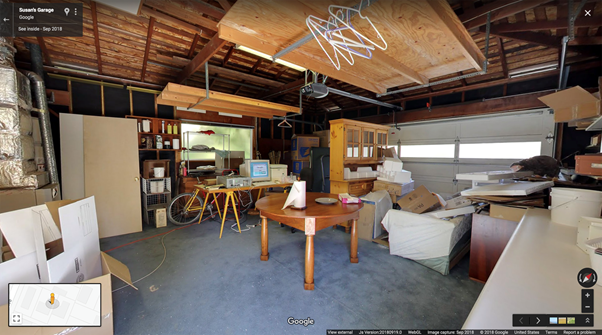
In September 1998, Google officially became a company when founders Larry Page and Sergey Brin incorporated the startup in California. At the time, the internet was expanding rapidly, but search engines were still inefficient and often returned inaccurate results. Page and Brin believed their PageRank algorithm could significantly improve how people find information online. After forming the company, they began building the early infrastructure needed to support their growing search engine. Their systems relied on clusters of computers equipped with powerful CPU components and early processors, which were used to index large portions of the web. These servers processed search queries and ranked websites according to relevance and link authority. The official incorporation marked the beginning of Google’s transformation from a university research project into a global technology company.
The Famous Garage Office
Google’s first official office was located in a rented garage owned by Susan Wojcicki in Menlo Park, California. This small workspace became one of the most famous startup locations in Silicon Valley history. Larry Page and Sergey Brin worked alongside a small team of engineers who focused on improving the search engine’s algorithms and server infrastructure. The early workspace was modest and filled with computer equipment, cables, and experimental hardware. Engineers assembled server racks using inexpensive components instead of expensive enterprise machines from companies like IBM or HP. These systems often ran on the Linux operating system, which allowed developers to customize and optimize performance. Despite the humble environment, the garage office became the birthplace of one of the most influential companies in the modern technology industry.
Andy Bechtolsheim’s First Investment
One of Google’s earliest and most important supporters was Andy Bechtolsheim, co-founder of Sun Microsystems. After seeing a demonstration of Google’s search technology, he immediately recognized its potential to transform how information is accessed online. Bechtolsheim famously wrote a check for $100,000 to “Google Inc." even before the company had officially opened a bank account. This early investment gave the founders the financial support needed to begin building a real business. With this funding, Page and Brin purchased additional computer hardware, including servers, storage systems, and networking equipment. These machines formed the foundation of Google’s early data infrastructure and allowed the search engine to scale quickly. The investment played a crucial role in helping Google transition from a research project into a fast-growing startup.
Early Search Engine Competition (Yahoo, AltaVista, Lycos)
During the late 1990s, Google entered a highly competitive search engine market. Several major platforms already existed, including Yahoo, AltaVista, and Lycos, which were popular among early internet users. These services attempted to organize web pages using keyword-based indexing and directory listings. However, their search results were often cluttered and less accurate compared to Google’s algorithm-based approach. Google’s PageRank system analyzed links between websites, allowing it to determine which pages were more trustworthy and relevant. This innovative ranking method quickly produced more useful search results than its competitors. As internet users discovered the improved search experience, Google’s popularity grew rapidly, setting the stage for its dominance in the search engine industry.
Google’s Early Growth and Innovation (1999–2003)
Venture Capital Funding (H3)
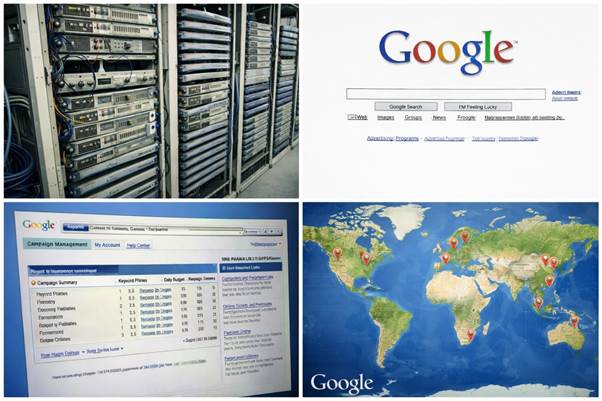
As Google continued gaining popularity in the late 1990s, the company needed significant financial support to expand its technology and infrastructure. Major venture capital firms such as Sequoia Capital and Kleiner Perkins recognized the potential of Google’s search technology and invested millions of dollars into the young startup. This funding allowed Google to hire more engineers and researchers who could further improve its algorithms and software systems. The investment also helped the company build larger server clusters powered by powerful CPU units and advanced processors to handle increasing numbers of search queries. With more computing power and engineering talent, Google was able to index more websites and deliver faster search results. These early investments played a critical role in transforming Google from a small startup into a rapidly growing technology company. Venture capital support also helped Google compete with established internet companies that already dominated the search market.
Google’s Minimalist Search Interface
One of the features that immediately distinguished Google from its competitors was its clean and minimalist search interface. While many early search engines filled their homepages with news links, advertisements, and cluttered directories, Google focused on simplicity. The homepage contained only the search box, the company logo, and a few basic navigation options. This design made the website extremely fast and easy to use, even on slower internet connections common in the early 2000s. The simplicity also reflected the founders’ philosophy that the search engine should prioritize accuracy and speed over visual distractions. Users quickly appreciated how quickly they could access information using Google’s interface. This minimalist approach later influenced modern web design and became a defining characteristic of Google’s brand identity.
Launch of Google AdWords
In the year 2000, Google introduced Google AdWords, a revolutionary advertising platform that changed the way online marketing worked. The system allowed businesses to display targeted advertisements alongside search results based on specific keywords. Advertisers could bid on search terms related to their products or services, ensuring their ads appeared when users searched for relevant topics. This model became known as pay-per-click advertising, where companies only paid when someone clicked their advertisement. Google’s infrastructure, powered by large-scale cloud computing systems and high-performance processors, made it possible to analyze search queries and display relevant ads instantly. AdWords quickly became the company’s primary source of revenue. Over time, it grew into one of the most powerful digital advertising platforms in the world.
First International Expansion
As Google’s popularity increased, the company began expanding beyond the United States. The early 2000s marked the start of Google’s international expansion, with new offices opening across Europe and Asia. These offices allowed Google to support multiple languages and provide localized search services for users in different countries. The company also built additional data centers to support its growing global user base. These facilities relied on powerful server infrastructure running on Linux systems and high-performance CPU clusters. Expanding internationally helped Google reach millions of new internet users who were beginning to adopt the web. This strategy transformed Google from a regional startup into a truly global technology company.
Google Becomes the Fastest Growing Search Engine
By the early 2000s, Google had become the fastest-growing search engine on the internet. Its powerful PageRank algorithm consistently delivered more relevant results than competing search platforms. Users quickly adopted Google because it provided faster, cleaner, and more accurate searches compared to other services. As internet usage expanded globally, the number of searches processed by Google increased dramatically. The company’s rapidly expanding data centers used powerful processors, massive storage systems, and distributed computing technology to handle this enormous demand. Google’s reputation for reliability and speed attracted both users and businesses looking for advertising opportunities. This period marked the beginning of Google’s dominance in the search engine industry.