DDR5 RAM Explained: Speed, Features, DDR4 vs DDR5 & Future of Memory
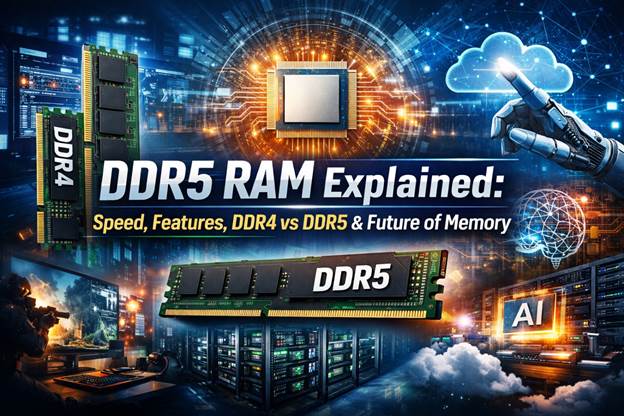
DDR5 (Double Data Rate 5) is the latest generation of ram designed to power modern computing systems. As technology rapidly evolves with artificial Intelligence, cloud computing, and advanced processors, memory performance has become more critical than ever.
From early computing systems developed by IBM to modern platforms powered by Intel, AMD, and even mobile ecosystems like Android and MacOS, memory has continuously evolved to meet increasing demands. DDR5 represents a major leap forward, delivering higher speeds, improved efficiency, and massive capacity improvements.
Compared to DDR4, DDR5 offers double the bandwidth, lower power consumption, and better scalability. This makes it ideal for everything from gaming and programming to enterprise workloads, cybersecurity systems, and high-performance data processing.
What is DDR5 RAM and Why It Matters
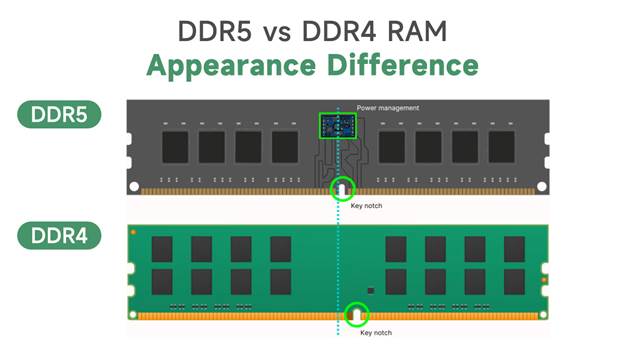
DDR5 SDRAM is a type of synchronous dynamic random-access memory developed by JEDEC and officially released in 2020. It is the direct successor to DDR4 and introduces major improvements in speed, efficiency, and capacity.
Earlier memory generations—from systems used by IBM to modern machines powered by Intel and AMD processors—focused on gradual performance gains. DDR5, however, is designed to handle the exponential growth in data and computing needs.
One of the key reasons DDR5 matters is its ability to support modern workloads. Applications such as artificial Intelligence, machine learning, and cloud computing require fast and reliable memory access. DDR5 delivers this with significantly higher bandwidth.
It also improves multitasking. Whether you’re running multiple applications, handling large PDF files, or working on complex programming projects, DDR5 ensures smoother performance.
Operating systems like Windows, Linux, and MacOS benefit greatly from DDR5 due to improved memory handling and reduced bottlenecks.
Another important factor is scalability. DDR5 supports much larger capacities, making it suitable for both personal computers and enterprise servers.
Finally, DDR5 is future-ready. As software becomes more demanding, DDR5 ensures your system remains capable of handling next-generation applications.
How DDR5 Works (Architecture Explained)
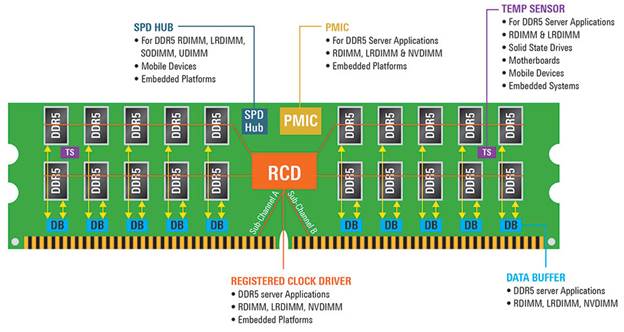
DDR5 introduces several architectural innovations that significantly improve performance and efficiency.
One of the most important changes is the introduction of dual independent subchannels. Each DDR5 module splits into two channels, allowing better parallel processing and faster data access.
The burst length has also been doubled from 8 to 16. This means more data is transferred per cycle, improving throughput and performance in data-intensive applications.
DDR5 also integrates a Power Management Integrated Circuit (PMIC) directly on the module. This allows more precise voltage control and improves energy efficiency.
Decision Feedback Equalization (DFE) enhances signal integrity at high speeds, ensuring stable performance even at very high frequencies.
DDR5 includes improved refresh mechanisms, reducing delays and improving data availability.
These features make DDR5 highly efficient for modern workloads, including large databases, cloud platforms, and services run by companies like Google and Oracle.
DDR5 vs DDR4: Full Comparison
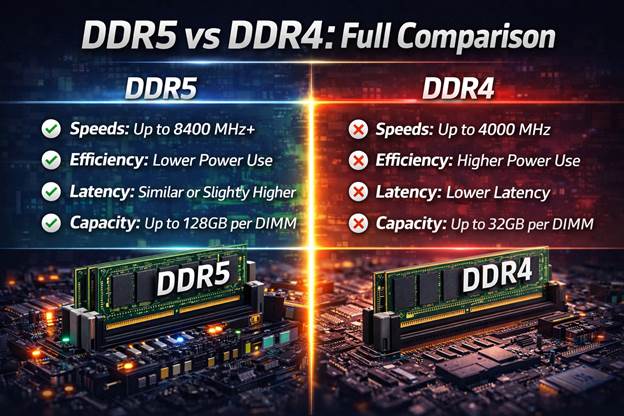
DDR5 represents a major upgrade over DDR4 in multiple areas.
| Feature | DDR4 | DDR5 | Improvement |
| Speed | 2133–3200 MT/s | 4800–8400+ MT/s | 🚀 Faster |
| Bandwidth | 25.6 GB/s | 70.4 GB/s | 2x+ higher |
| Voltage | 1.2V | 1.1V | More efficient |
| Capacity | Up to 32GB | Up to 512GB | Huge increase |
| ECC | Optional | On-die ECC | Better reliability |
DDR5 starts at much higher base speeds, allowing faster data transfer and improved responsiveness.
The increased bandwidth allows systems to process more data simultaneously, which is essential for gaming, video editing, and artificial Intelligence workloads.
DDR5 also reduces power consumption, which helps keep systems cooler and more stable.
Another key advantage is capacity. DDR5 supports significantly larger modules, enabling better multitasking and performance.
In real-world usage, DDR5 improves load times, multitasking, and application performance.
While DDR4 is still useful for basic systems, DDR5 is clearly the better choice for modern and future systems.
Key Features of DDR5 RAM
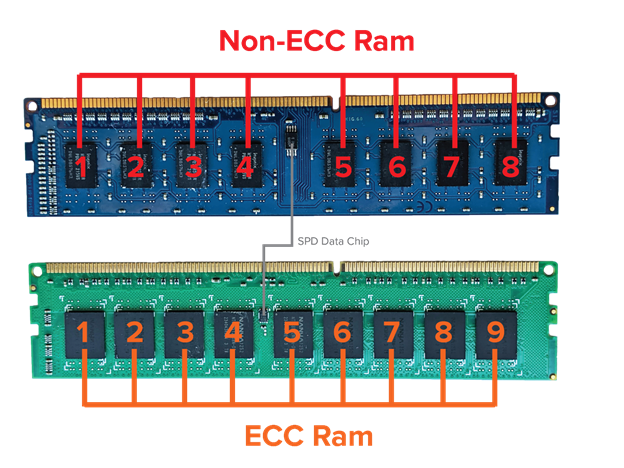
DDR5 introduces several advanced features that improve both performance and reliability.
One of the most important features is on-die ECC, which automatically detects and corrects errors within the memory chip. This improves data integrity and system stability.
This is especially important for systems focused on cybersecurity, where data accuracy is critical.
DDR5 also supports significantly higher capacities, making it ideal for enterprise environments and large-scale applications.
Improved power efficiency reduces heat generation and energy consumption.
The dual-channel design enhances multitasking and parallel processing capabilities.
DDR5 is also optimized for future hardware, ensuring compatibility with next-generation processors.
These features make DDR5 suitable for both consumer and enterprise systems.
DDR5 Performance in Real-World Use

DDR5 delivers significant improvements in real-world performance.
In gaming, DDR5 reduces loading times and improves frame rates, especially in demanding titles.
For content creation, DDR5 enhances performance in video editing, 3D rendering, and design applications.
In artificial Intelligence, DDR5 enables faster training and data processing.
Enterprise environments benefit from DDR5 through improved cloud performance and scalability.
DDR5 also improves multitasking, allowing multiple applications to run smoothly.
Even in systems designed to defend against hackers, DDR5 helps process data faster for real-time threat detection.
Compatibility and System Requirements
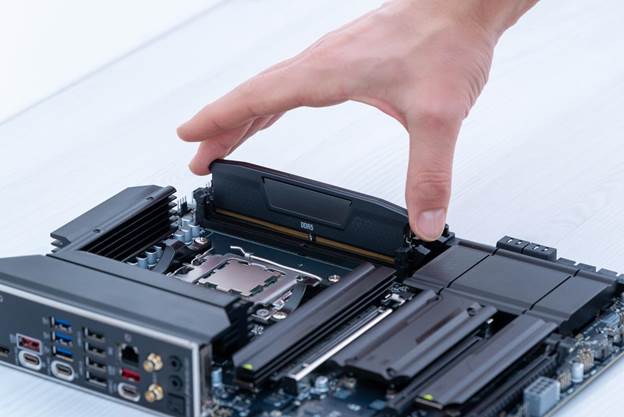
DDR5 requires compatible hardware to function.
It is not backward compatible with DDR4 motherboards, meaning users must upgrade both the motherboard and CPU.
Modern Intel and AMD processors support DDR5, depending on the chipset.
Operating systems such as Windows, Linux, and MacOS fully support DDR5.
Proper BIOS configuration is necessary to achieve optimal performance.
Users should verify compatibility before upgrading to avoid issues.
DDR5 is widely used in desktops, laptops, and servers.
DDR5 and Future Technologies
DDR5 is a key enabler of future technologies.
It supports advancements in artificial Intelligence, machine learning, and big data.
DDR5 improves encryption performance, making systems more secure.
In cybersecurity, faster memory enables quicker threat detection.
Cloud platforms benefit from improved performance and scalability.
DDR5 will continue to evolve with new innovations.
Pros and Cons of DDR5
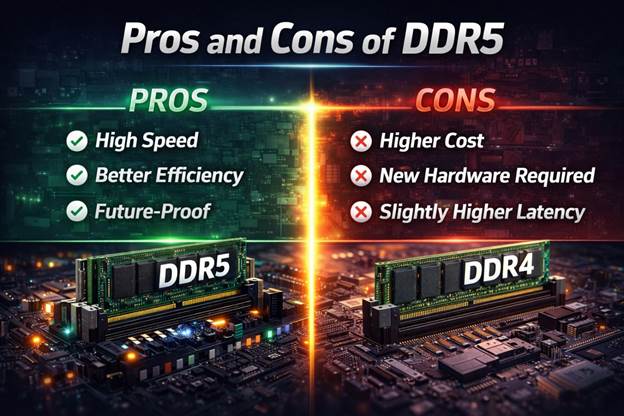
DDR5 offers many advantages but also has some drawbacks.
Advantages include higher speed, better efficiency, and future-proof design.
DDR5 reduces power consumption and improves system stability.
However, DDR5 is more expensive than DDR4.
It also requires new hardware, increasing upgrade costs.
In some cases, performance improvements may not be noticeable for basic users.
Overall, DDR5 is best suited for high-performance systems.
How to Choose DDR5 RAM
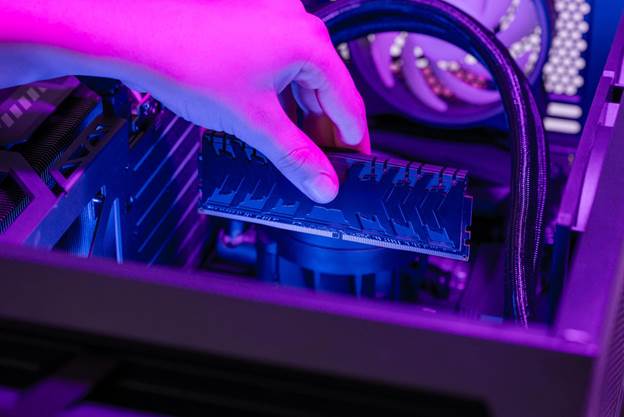
Choosing the right DDR5 RAM depends on your needs.
For gaming, 16GB to 32GB is recommended.
For professional workloads, 64GB or more may be needed.
Speed and latency should both be considered.
Reliable brands ensure better performance and durability.
Check motherboard compatibility before purchasing.
Overclocking can improve performance but requires proper cooling.
Selecting the right DDR5 ensures optimal performance and longevity.