Floppy Disks: Complete Guide to the Classic Portable Storage Technology That Shaped Early Computing
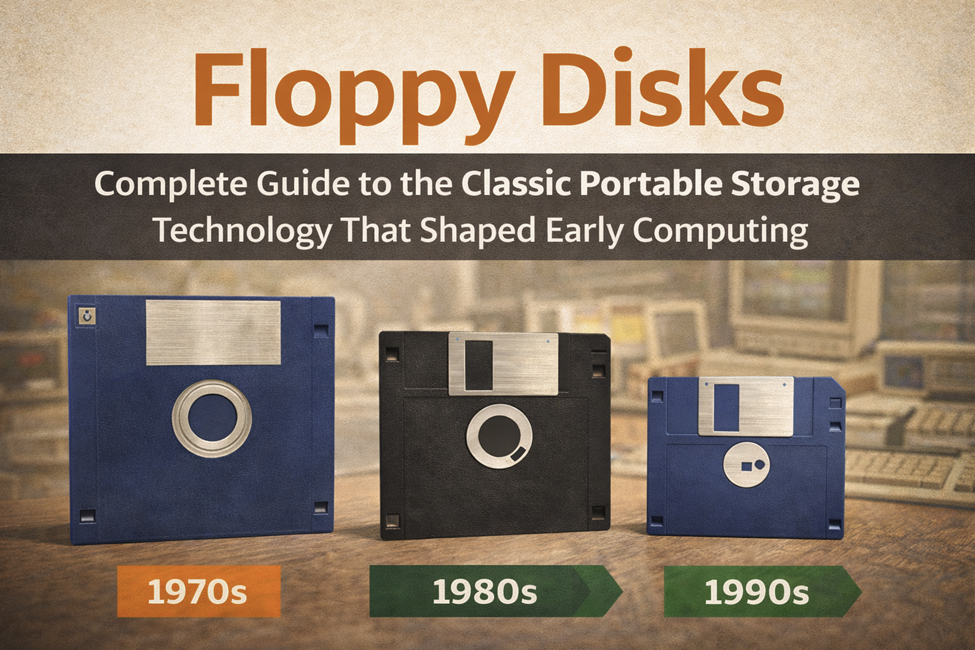
Floppy disks were once one of the most important storage technologies in the history of computing. Before , SSD storage devices, and modern cloud platforms existed, floppy disks allowed users to store files, install operating systems, and transfer data between computers.
During the early era of personal computing, floppy disks were essential tools used by individuals, universities, and businesses. Companies such as IBM, Microsoft, Intel, and HP relied heavily on floppy disks to distribute software and system updates.
Computers during the 1980s and early 1990s had very limited internal storage, small amounts of Ram, and relatively slow processors. Because of these limitations, floppy disks became the most practical way to transfer digital information.
Floppy disks were widely used to install operating systems like Windows, Linux, and MacOS, and they often stored important documents including PDF manuals and technical guides. Developers used floppy disks to distribute programming tools, compilers, and software libraries.
Although modern devices such as smartphones from Samsung, Sony, and Motorola running Android now rely on high-speed storage and cloud synchronization powered by Google, the floppy disk remains one of the most iconic technologies in computer history.
Understanding floppy disks helps illustrate how data storage evolved—from simple magnetic disks to powerful Artificial Intelligence data centers and advanced storage infrastructure used today.
History of Floppy Disks and Early Development
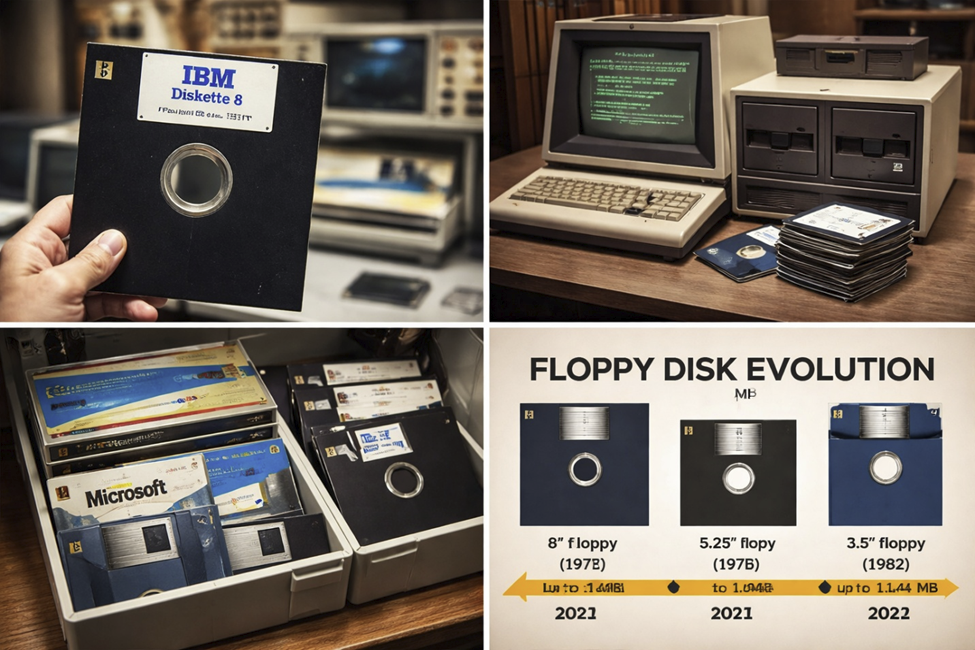
Floppy disks were first introduced in 1971 by IBM engineers as a portable storage medium for mainframe computers. The original design was created to help engineers distribute microcode updates and system utilities.
Before floppy disks, computer data was typically stored on punch cards or magnetic tape. These systems were bulky and inefficient compared with floppy disks.
The first floppy disk measured eight inches in diameter and had limited storage capacity. However, it was revolutionary because it allowed users to easily transport digital information.
During the late 1970s, personal computers began appearing in offices and homes. Technology companies such as Microsoft and Intel were developing software platforms that required reliable distribution methods.
Floppy disks quickly became the standard medium for delivering operating systems, utilities, and business applications.
Universities used floppy disks to distribute programming tools and educational software.
Hardware manufacturers such as HP also distributed firmware updates using floppy disks.
By the mid-1980s, floppy disks were supported by nearly every computer platform including Windows, Linux, and MacOS.
Types of Floppy Disks
Floppy disks evolved through several generations as storage technology improved. Each new design attempted to increase capacity and durability.
Manufacturers including IBM, Sony, and HP helped develop the most widely used floppy disk formats.
8-Inch Floppy Disk
The first floppy disks introduced by IBM were 8 inches in diameter. These disks were primarily used in mainframe computers.
5.25-Inch Floppy Disk
The 5.25-inch disk became the dominant format in early personal computers during the 1980s.
Software such as early Microsoft Windows, games, and programming tools were distributed using these disks.
3.5-Inch Floppy Disk
The 3.5-inch floppy disk became the most recognizable version of the technology.
It included a rigid plastic case and a sliding metal shutter to protect the magnetic surface.
These disks commonly stored 1.44 MB of data.
They were widely used for installing Windows, Linux, and MacOS.
How Floppy Disks Work
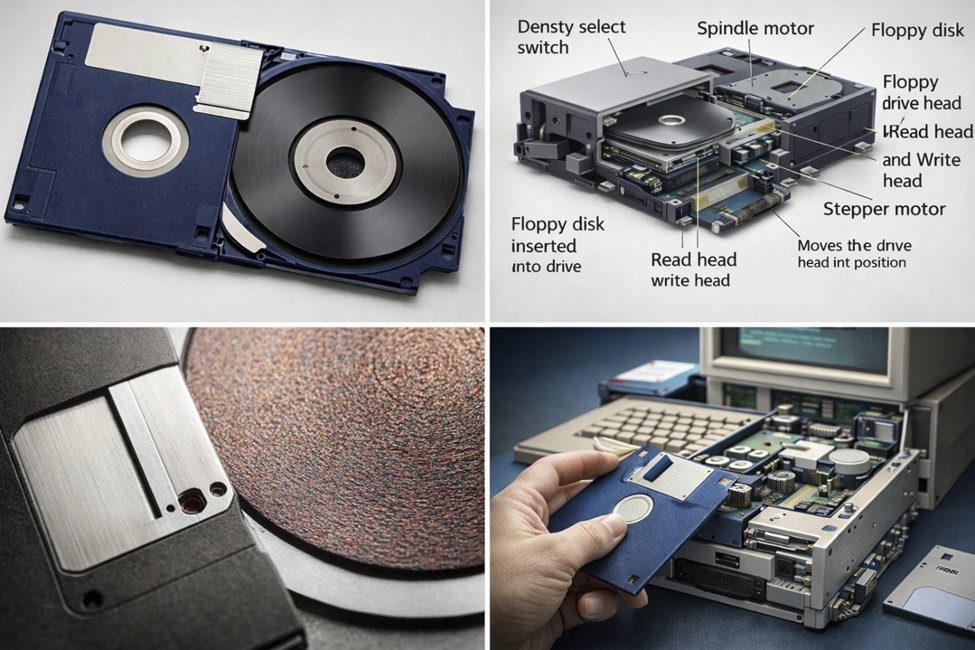
Floppy disks store information using magnetic recording technology. Inside the casing is a thin magnetic disk that rotates when inserted into a disk drive.
The floppy disk drive contains read/write heads that interact with the magnetic surface.
These heads encode data as magnetic patterns which represent binary information.
Files stored on floppy disks could include software programs, operating systems such as Windows or Linux, configuration files, and documents like PDF manuals.
Because early computers had limited Ram, programs were loaded from floppy disks into memory before being executed by the system’s processors.
System administrators frequently used bootable floppy disks for diagnostics and password recovery.
Developers also distributed programming compilers and utilities using floppy disks.
Although obsolete today, floppy disk technology influenced the development of modern hard drives and enterprise cloud storage.
Role of Floppy Disks in Software Distribution
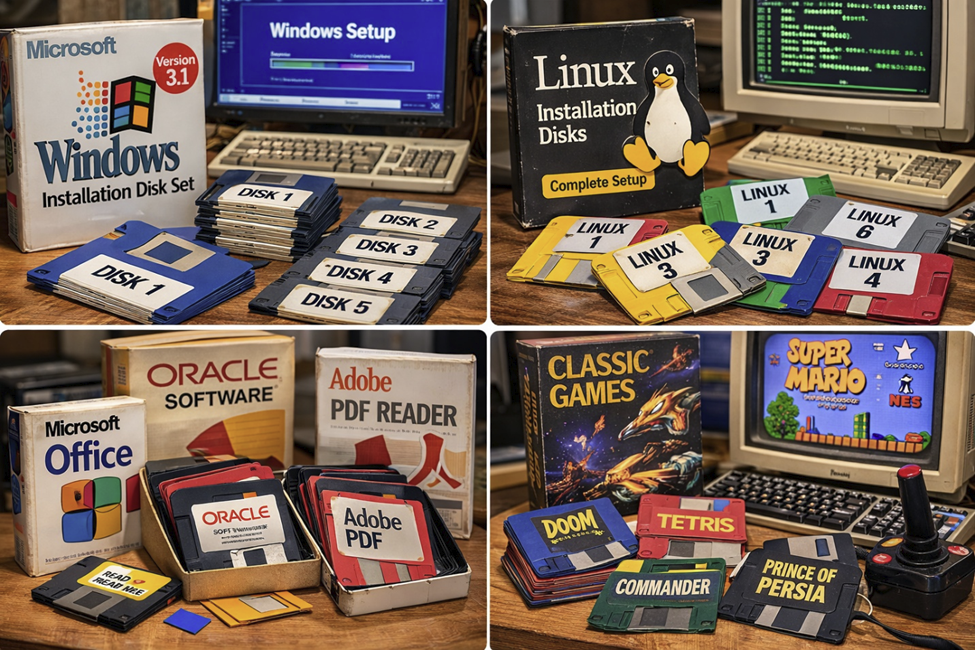
Before internet downloads became common, floppy disks were the main method of distributing software.
Companies such as Microsoft, Oracle, and IBM distributed their products on floppy disks.
Installing early versions of Windows required multiple disks inserted one after another.
Universities used floppy disks to distribute programming tools and academic software.
Businesses used them to share reports, spreadsheets, and PDF documentation.
Drivers for hardware created by Intel and HP were also distributed using floppy disks.
Before cloud storage existed, file transfer between computers often required physically moving floppy disks.
Despite their small capacity, floppy disks helped spread software innovation worldwide.
Security and Data Protection on Floppy Disks
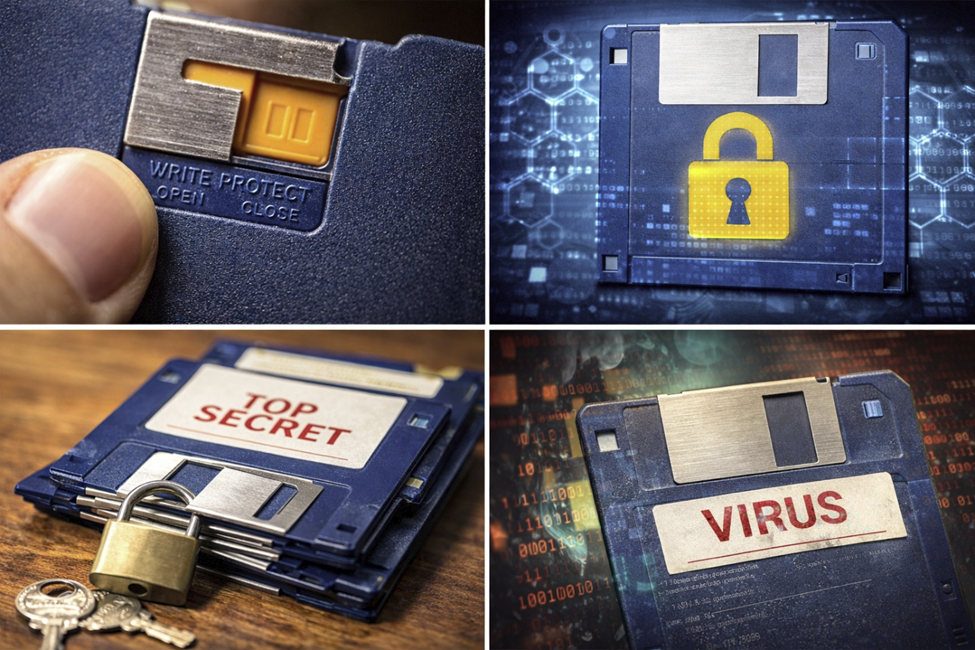
Floppy disks introduced new security challenges because they were easy to copy and transport.
Organizations often stored sensitive files protected with a password.
The built-in write-protect tab prevented accidental data modification.
However, floppy disks were also responsible for spreading some of the earliest computer viruses.
Infected disks could transmit malware between systems running Windows, Linux, and MacOS.
This problem led to the development of early antivirus software.
Companies such as Microsoft began investing heavily in security tools.
Today, advanced protection technologies use encryption, Artificial Intelligence, and cloud security systems.
Floppy Disk Storage Capacity and Technical Specifications
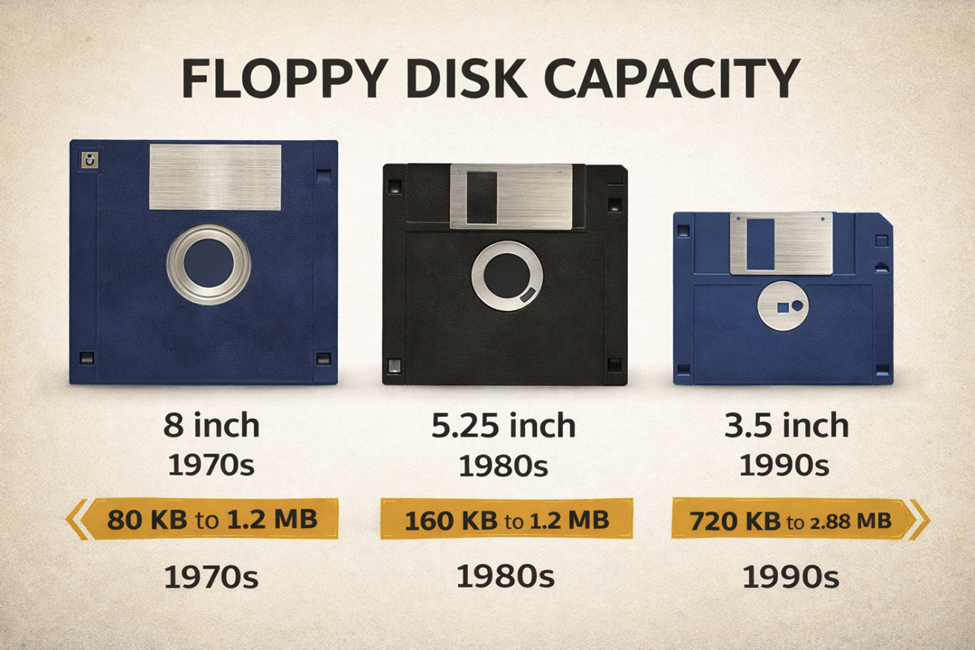
Floppy disk capacity varied depending on the format.
Early 8-inch disks stored around 80 KB to 256 KB of data.
5.25-inch disks increased capacity to around 360 KB and later 1.2 MB.
The most popular format, the 3.5-inch disk, stored 1.44 MB.
Although small by modern standards, this was enough for early operating systems and programming tools.
Today, a single smartphone photo taken on a Samsung or Sony device may exceed the entire capacity of a floppy disk.
Modern storage solutions powered by cloud platforms can store billions of files.
Decline of Floppy Disks and Rise of Modern Storage
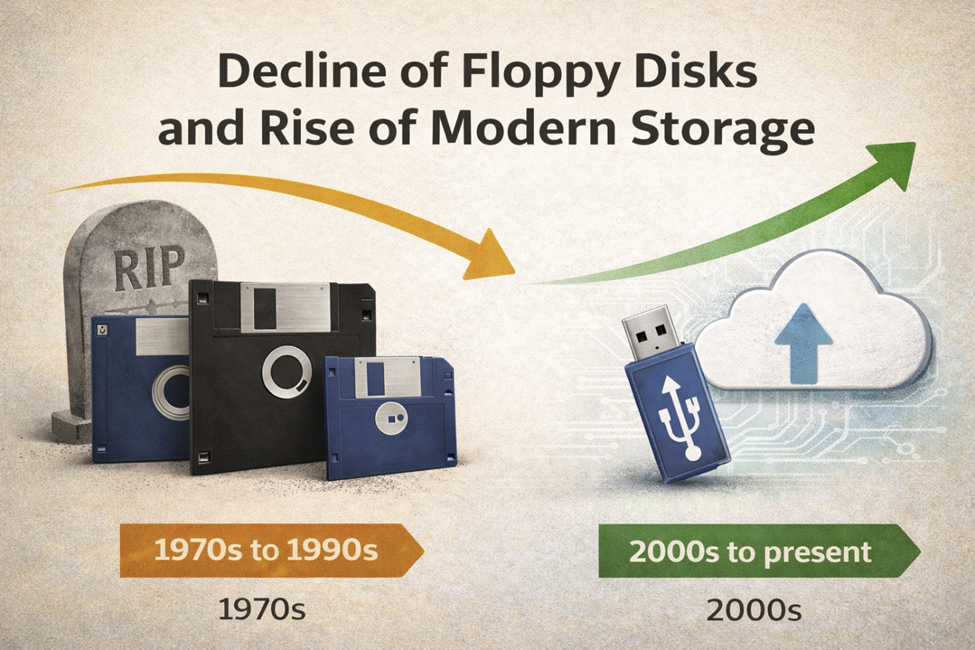
Floppy disks began disappearing in the early 2000s.
The main reason was their limited storage capacity and slow performance.
USB flash drives and optical discs provided significantly more storage space.
External hard drives and SSDs further improved performance.
Meanwhile, internet connectivity allowed users to download software directly.
Companies such as Google, Microsoft, and Oracle invested heavily in cloud storage systems.
Modern Android devices from Samsung, Sony, and Motorola now rely on high-speed storage and online synchronization.
Floppy Disks in Modern Computing History
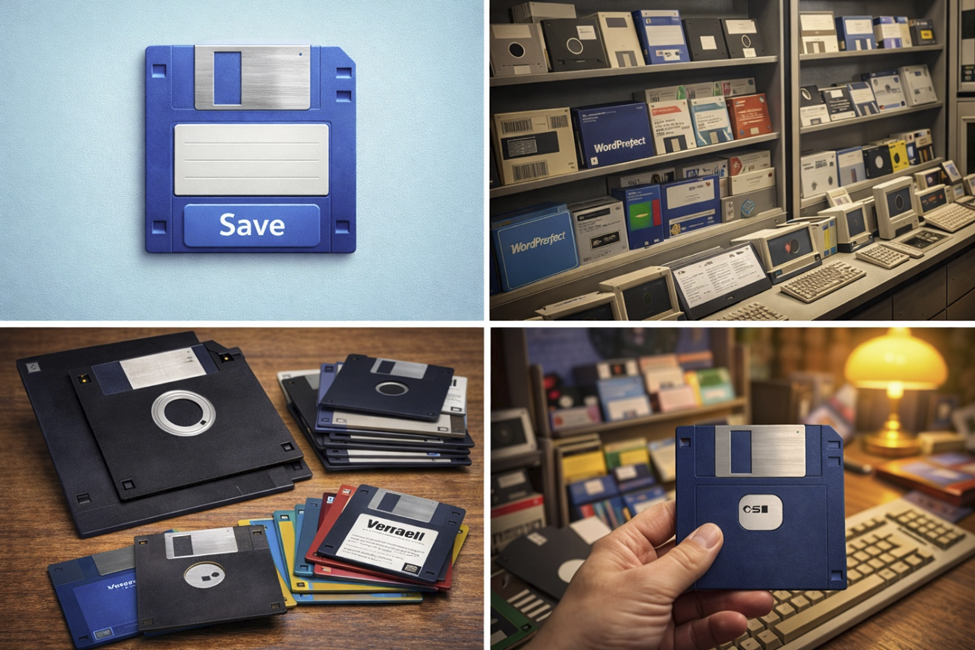
Even though floppy disks are obsolete, they remain one of the most recognizable symbols in computing.
Many software applications still use the floppy disk icon for the Save function.
Computer museums display floppy disks alongside early computers built by IBM, Intel, and HP.
Retro computing enthusiasts continue to collect floppy disks and vintage hardware.
Some hobbyists still run early versions of Windows, Linux, and MacOS on restored machines.
Modern Artificial Intelligence and cloud computing platforms rely on storage technologies that evolved from early magnetic disks.
Floppy disks helped establish the foundation for portable digital storage.