THE ORIGINS AND EVOLUTION OF THE COMPUTER MOUSE – PART 1.
The Complete History of the Computer Mouse: From Invention to Innovation
Introduction to the Computer Mouse
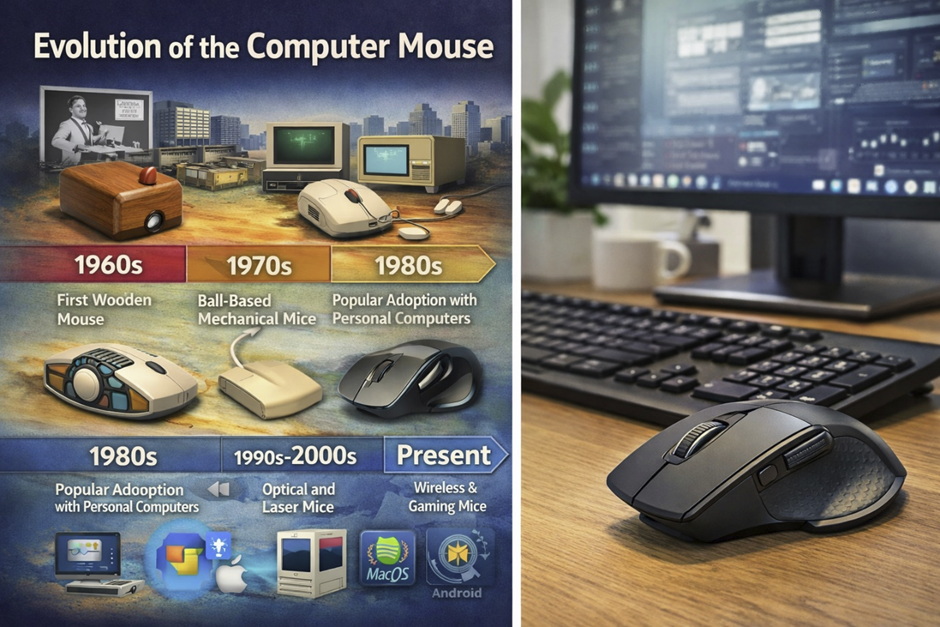
The computer mouse is one of the most influential input devices in computing history, transforming how users interact with machines since the mid-1960s. Before its invention, computers relied heavily on typed commands through the keyboard, making interaction complex and limited to trained specialists. The introduction of the mouse revolutionized the user interface, allowing intuitive point-and-click navigation that significantly improved usability. This innovation became tightly linked with the rise of the GUI (Graphical User Interface), especially in systems developed by Microsoft and Apple during the 1980s. Over time, the mouse evolved from a simple mechanical device into advanced optical and wireless tools used in modern computing environments. It also played a critical role in fields like programming, web development, and even system administration, where efficiency and precision are essential. Today, the mouse continues to complement technologies such as Artificial Intelligence and cloud-based systems, proving its lasting importance in human-computer interaction.
What Is a Computer Mouse?
A computer mouse is a handheld pointing device that detects two-dimensional motion relative to a surface and translates it into movement on a screen. First conceptualized in 1964 by Douglas Engelbart, it was designed to simplify interaction with digital systems. The mouse typically includes buttons and sometimes a scroll wheel, enabling users to execute commands such as selecting, dragging, and opening files like PDF documents. Modern mice use optical or laser sensors instead of mechanical parts, improving precision and durability. These devices communicate with computers via wired connections like USB drives interfaces or wireless technologies such as Bluetooth. The mouse works in conjunction with the CPU, ram, and processors to execute user commands in real time. It is now a standard component in operating systems like Windows, MacOS, and Linux, making it indispensable for everyday computing tasks.
Why the Mouse Became Essential in Computing
The mouse became essential because it dramatically simplified how users interact with computers, especially as systems became more visually oriented. Before graphical systems, users had to memorize complex command-line instructions, which limited accessibility. With the rise of the GUI, users could navigate icons, menus, and windows visually, reducing the need for technical expertise. Companies like Microsoft and IBM played major roles in integrating mouse support into mainstream operating systems. The mouse enabled faster workflows, such as dragging files, managing folders, and even performing tasks like upload files to the cloud. It also enhanced productivity in creative and technical fields, including design and Python-based development environments. Furthermore, the mouse improved security interactions, such as entering a password or managing antivirus tools against threats like a virus or trojan. Its intuitive nature made computing accessible to millions of new users worldwide.
Early Human-Computer Interaction Before the Mouse
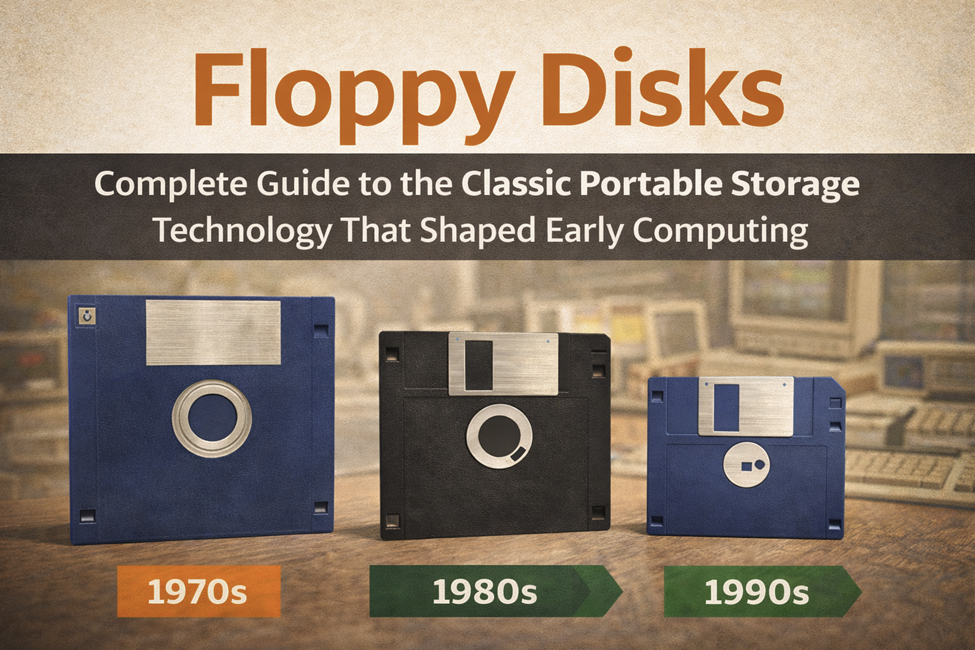
Before the mouse, human-computer interaction was primarily text-based and required specialized knowledge. Early systems in the 1950s and 1960s used punch cards and floppy disks to input and store data. Users interacted with machines through command-line interfaces, which demanded precise syntax and often resulted in errors if commands were mistyped. Large organizations, including IBM, developed early computing systems that required trained operators for system administration tasks. There were no visual elements like icons or windows, making it difficult to manage large files or perform operations such as compression efficiently. Input devices were limited to keyboards and switches, with no direct way to point or select items on a screen. This created a barrier for non-technical users and slowed down adoption. The invention of the mouse marked a turning point by introducing a more natural and intuitive method of interaction.
Overview of Mouse Evolution Timeline
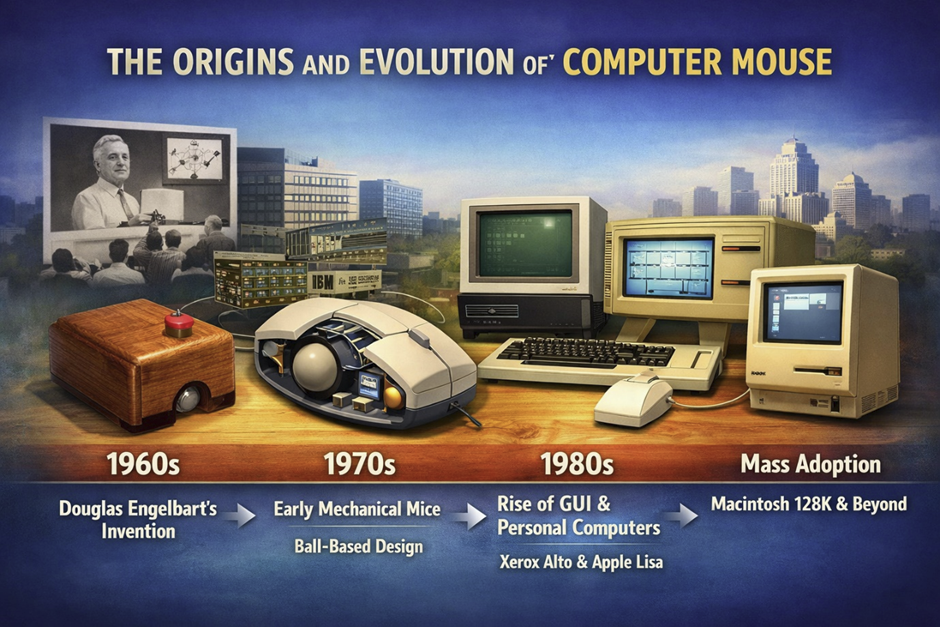
The evolution of the mouse spans several decades, beginning with the wooden prototype created in 1964 at the Stanford Research Institute. In the 1970s, engineers like Bill English improved the design by introducing ball-based mechanisms. The 1980s saw widespread adoption as companies like Apple and Microsoft integrated mice into personal computers. During the 1990s, optical technology replaced mechanical components, eliminating issues related to dust and wear. The early 2000s introduced wireless mice, improving mobility and reducing cable clutter. Today, modern devices include advanced sensors, ergonomic designs, and customizable features used by brands such as HP, Samsung, and Sony. The mouse continues to evolve alongside innovations in Android and Google ecosystems, adapting to new computing environments. This timeline reflects how a simple invention became a cornerstone of modern digital interaction.
The Birth of the Computer Mouse
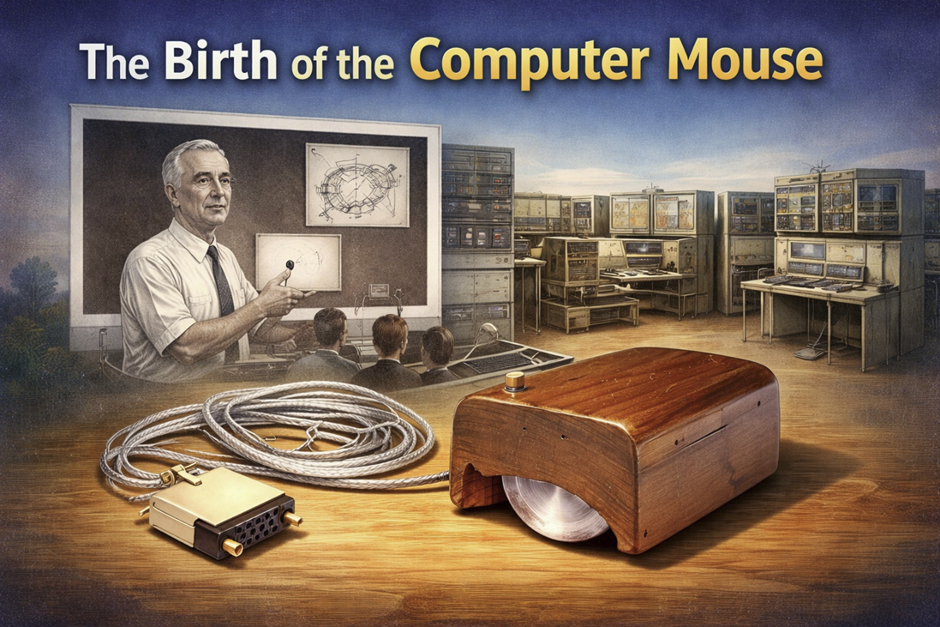
The birth of the computer mouse represents a groundbreaking moment in computing history, originating in the early 1960s during a period of rapid technological innovation. The concept was developed by Douglas Engelbart, a visionary researcher working at the Stanford Research Institute in California, USA. His goal was to enhance human intellect through better interaction with computers, leading to the creation of the first mouse prototype in 1964. At that time, computers were massive machines controlled through complex commands, making them inaccessible to most users. Engelbart’s invention aimed to simplify navigation and improve efficiency in emerging digital environments. This innovation laid the foundation for modern user interface design and later influenced companies like Intel and Oracle in developing advanced computing systems. The mouse was not immediately popular, but its long-term impact on computing is undeniable.
The Vision of Douglas Engelbart
Douglas Engelbart was a pioneer who believed that computers could augment human intelligence rather than just perform calculations. In the early 1960s, he envisioned interactive systems where users could manipulate data visually instead of relying solely on text commands. Working in California, he focused on creating tools that would improve collaboration and productivity. His ideas were revolutionary at a time when computers were mainly used for scientific and military purposes. Engelbart’s work also influenced later developments in programming and interactive systems. He saw the potential for computers to manage complex information, including documents and structured data. His vision ultimately led to the invention of the mouse, which became a key component in modern computing. Today, Engelbart is widely recognized as one of the most influential figures in computer history.
The Role of Stanford Research Institute
The Stanford Research Institute (SRI) played a crucial role in supporting Engelbart’s research and development efforts. Located in Menlo Park, California, SRI provided the resources and environment needed to explore innovative computing concepts during the 1960s. The institute focused on advancing technology for both government and commercial applications. Engelbart’s team worked on projects that combined hardware and software innovations, including early forms of interactive computing. This environment allowed the development of the first mouse prototype and other groundbreaking technologies. SRI’s contributions extended beyond the mouse, influencing areas such as networking and data management. The institute’s work helped shape the future of computing and laid the groundwork for companies like HP and Intel. Without SRI’s support, the mouse might not have been developed as early as it was.
The First Mouse Prototype (1964)
The first mouse prototype was created in 1964 and was made of wood, giving it a very different appearance compared to modern devices. It featured two perpendicular wheels that detected movement along the X and Y axes. This design allowed users to move a cursor on the screen by physically moving the device across a surface. The prototype was connected to a computer system that processed input through its CPU and internal components. Unlike today’s devices, it lacked buttons and advanced features, focusing purely on movement tracking. The invention demonstrated a new way to interact with digital information, making it easier to navigate complex systems. Although primitive, this prototype laid the foundation for future innovations in input devices. It remains one of the most important milestones in computing history.
How the Wooden Mouse Worked (Two-Wheel Mechanism)
The wooden mouse used a unique two-wheel mechanism to detect motion, with each wheel responsible for a different direction. One wheel tracked horizontal movement, while the other tracked vertical movement, allowing precise cursor control. This mechanical system converted physical motion into electrical signals processed by the computer. Unlike later designs, it did not rely on a rolling ball or optical sensor. The simplicity of the design made it effective, though not very practical for widespread use. Engineers later improved this mechanism to create more reliable and efficient devices. The concept of translating physical movement into digital input became a standard in computing. This early design influenced the development of modern input devices used in systems like Windows and Linux.
The Origin of the Name “Mouse"
The name “mouse" originated from the device’s physical appearance and its cable, which resembled a tail. Early versions of the device had a cord extending from the back, making it look like a small rodent. This informal name quickly became widely accepted and remains in use today. Interestingly, the term was never officially standardized but became popular through common usage. The simplicity of the name made it easy to remember and helped with public adoption. Over time, the mouse became a universal symbol of computing, recognized across different platforms and devices. Even as technology advanced, the name remained unchanged, reflecting its historical roots. Today, the mouse is an essential part of digital interaction worldwide.
The First Public Demonstration
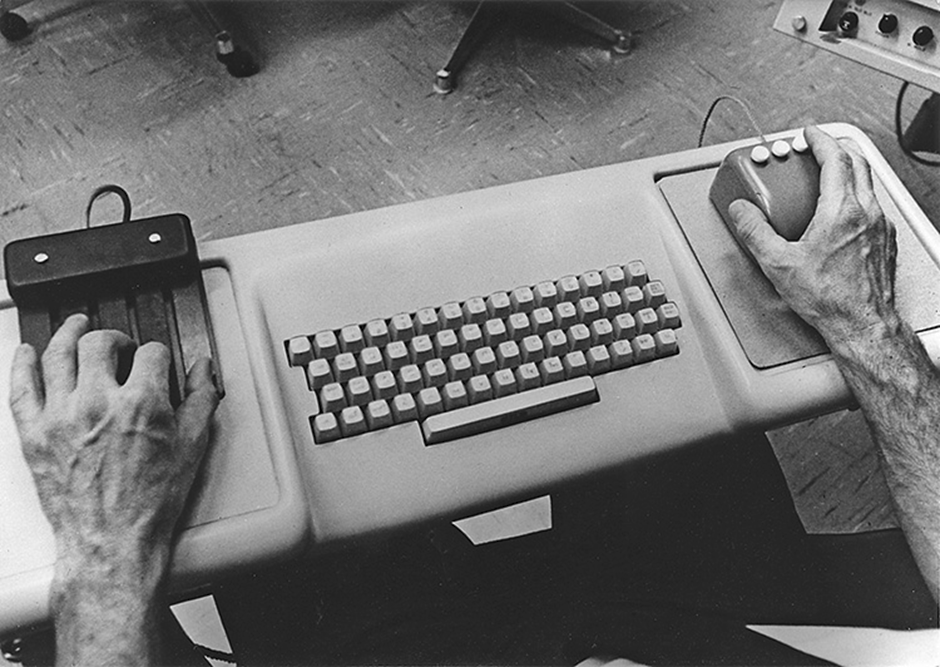
The first public demonstration of the computer mouse took place in 1968 during a historic event that would later be called The Mother of All Demos. This event was presented by Douglas Engelbart in San Francisco, USA, and showcased revolutionary technologies far ahead of their time. The demonstration introduced not only the mouse but also concepts such as hypertext, video conferencing, and collaborative editing. It marked a turning point in computing, showing how machines could become interactive tools rather than static calculators. The audience included engineers, researchers, and industry leaders who witnessed the future of computing firsthand. This event influenced major companies like Microsoft and Apple, which later adopted similar concepts in their systems. The demonstration remains one of the most important moments in technology history.
The Famous The Mother of All Demos
The event known as The Mother of All Demos took place on December 9, 1968, and is considered one of the most influential technology presentations ever. During the demonstration, Engelbart showcased a fully interactive computing system that included the mouse as a central component. The presentation lasted about 90 minutes and was broadcast to a live audience. It introduced concepts that would later become standard in modern computing. The demonstration also included real-time collaboration and document editing features. These innovations were decades ahead of their time and set the stage for future developments. Today, this event is remembered as a milestone in the evolution of digital technology.
Features Demonstrated: Hypertext, GUI, and Mouse
One of the most remarkable aspects of the demonstration was the introduction of hypertext, which allowed users to link and navigate between documents. This concept later became the foundation of the internet and modern web development. The GUI demonstrated during the event showed how users could interact with visual elements instead of text commands. The mouse played a key role in enabling this interaction, allowing users to select and manipulate objects on the screen. These features transformed how people interacted with computers and made them more accessible. The demonstration also showed how information could be organized and accessed efficiently. These innovations laid the groundwork for modern computing systems.
Impact on Future Computing Technologies
The impact of the demonstration on future computing technologies was profound and far-reaching. It inspired the development of graphical operating systems and user-friendly interfaces. Companies like Apple, Microsoft, and IBM incorporated these ideas into their products during the following decades. The mouse became a standard input device, essential for navigating complex systems. The demonstration also influenced advancements in networking and collaborative tools. It helped shape the direction of computing research and development. Many of the concepts introduced during the demo are still used in modern systems today.
Public and Industry Reaction
The reaction to the demonstration was mixed at first, with some recognizing its potential while others considered it too advanced. Many industry professionals were impressed by the innovation but unsure of its practical applications. Over time, however, the significance of the demonstration became clear. It influenced research institutions and technology companies worldwide. The mouse and related technologies eventually became standard components of personal computers. The demonstration is now seen as a visionary moment in computing history. Its legacy continues to shape modern technology.
Early Mouse Development and Improvements (1970s)
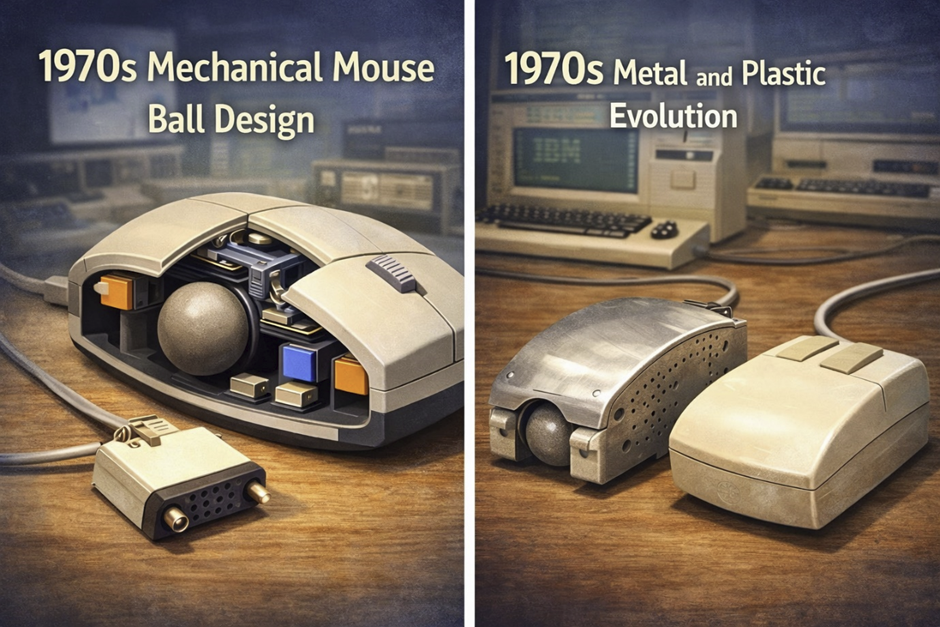
The 1970s marked a crucial decade in the evolution of the computer mouse, as engineers focused on improving durability, usability, and manufacturing scalability. After the initial wooden prototype created in 1964, researchers began experimenting with new materials such as metal and plastic to make the device more practical for everyday use. During this period, computing technology was also advancing, with organizations like IBM and emerging hardware innovators working to integrate input devices with evolving systems. One of the most important breakthroughs was the transition to ball-based mechanisms, which replaced the earlier two-wheel design and allowed smoother multidirectional movement. These improvements made the mouse more reliable and easier to use in professional environments. The decade also saw increasing interest from companies involved in system administration and early computing infrastructure. As storage technologies like floppy disks became more common, the need for intuitive navigation tools grew significantly. This era laid the foundation for the mouse’s future integration into personal computing systems.
Transition from Wooden to Metal and Plastic Designs
During the early 1970s, engineers moved away from the original wooden casing and began using metal and plastic materials to improve durability and production efficiency. These new materials allowed manufacturers to create lighter and more ergonomic designs, making the device easier to handle. Plastic, in particular, became the dominant material due to its cost-effectiveness and flexibility in shaping. This transition also enabled mass production, which was essential for commercial adoption. Companies working with early computing hardware, including HP, explored ways to standardize input devices for broader use. The redesign also improved internal component protection, reducing wear and tear during operation. These advancements made the mouse more practical for integration into office environments and computing labs. As a result, the device began to shift from a research prototype to a commercially viable product.
Introduction of Ball-Based Mechanical Mice
One of the most significant innovations of the 1970s was the introduction of the ball-based mechanical mouse. This design replaced the earlier two-wheel system with a rolling ball that could detect movement in all directions. Inside the mouse, rollers connected to the ball translated physical motion into signals processed by the computer’s CPU. This allowed for smoother and more accurate cursor movement compared to earlier designs. The ball mechanism also made the mouse more adaptable to different surfaces, increasing its usability. However, it required regular cleaning due to dust accumulation, which could affect performance. Despite this limitation, the ball-based mouse became the standard design for many years. It played a key role in preparing the device for widespread adoption in personal computing.
Contributions by Bill English
Bill English, a colleague of Douglas Engelbart, played a vital role in refining the mouse during the 1970s. After working on the original prototype, he continued development efforts to improve its functionality and usability. English is credited with introducing the ball-based mechanism, which significantly enhanced the device’s performance. His work helped transform the mouse from an experimental tool into a practical input device. He later joined Xerox PARC in California, where further advancements were made in computing technology. His contributions were instrumental in bridging the gap between research and commercial application. English’s innovations influenced the design of future mice used in systems developed by companies like Microsoft and Apple. Today, he is recognized as a key figure in the history of computer input devices.
Early Patents and Commercial Interest
During the 1970s, the mouse began attracting commercial interest, leading to the filing of patents and increased investment in its development. The original patent for the mouse was granted to Douglas Engelbart in 1970, officially recognizing the invention. This milestone encouraged companies to explore ways to integrate the device into their systems. Organizations like IBM and research centers began experimenting with mouse-compatible interfaces. The growing interest was also driven by the need for better interaction tools as computing systems became more complex. Early adopters saw the potential for improving productivity and user experience. Although the mouse was not yet widely used, it was clear that it had significant commercial potential. This period set the stage for its integration into personal computers in the following decade.
The Mouse Meets Personal Computers (1980s)
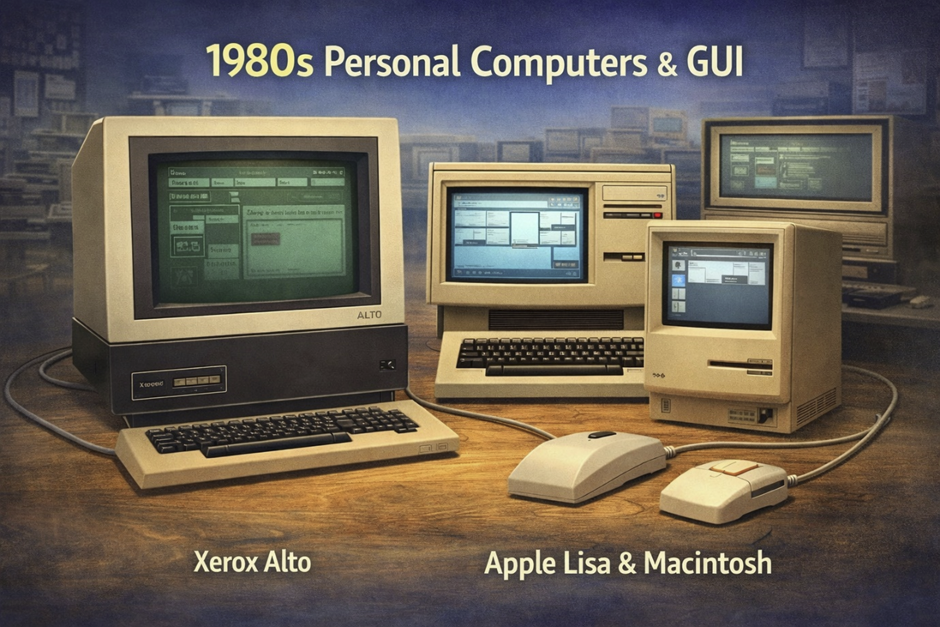
The 1980s marked the turning point when the computer mouse transitioned from a specialized tool into a mainstream component of personal computing. As personal computers became more accessible, companies began integrating graphical systems that required intuitive input devices. The rise of the GUI made the mouse essential for navigating visual environments, replacing complex command-line interactions. Major technology companies such as Microsoft, Apple, and IBM played key roles in popularizing mouse usage. This decade also saw the development of standardized operating systems that relied heavily on pointer-based interaction. The mouse enabled users to perform tasks such as opening applications, managing files, and interacting with software more efficiently. It became especially important in environments involving web development and document handling like PDF editing. The widespread adoption during this era cemented the mouse as a fundamental part of modern computing.
Integration with Early Personal Computers
As personal computers emerged in the late 1970s and early 1980s, the need for user-friendly input devices became increasingly important. Early systems relied heavily on keyboards, which limited accessibility for non-technical users. The introduction of the mouse allowed users to interact with computers visually, making systems easier to learn and use. Companies like IBM began exploring ways to integrate mouse support into their hardware and software. This integration improved efficiency in tasks such as file management and application navigation. The mouse also played a role in simplifying workflows involving data handling and document editing. As a result, it became a standard component in many personal computing systems. This shift marked the beginning of widespread adoption.
The Role of Xerox and the Xerox Alto
The development of the Xerox Alto at Xerox PARC in California was a major milestone in the history of the mouse. Introduced in 1973, the Alto was one of the first computers to use a graphical interface controlled by a mouse. This system demonstrated how visual interaction could improve usability and efficiency. Researchers at Xerox developed innovative technologies that influenced future computing systems. The Alto was not widely commercialized, but its concepts were groundbreaking. It introduced features such as windows, icons, and menus that are still used today. The mouse was central to navigating this environment, proving its practical value. This system inspired later developments by companies like Apple and Microsoft.
Commercial Use in Xerox Star
The Xerox Star, released in 1981, was the first commercially available computer system to fully integrate a graphical interface and mouse. Unlike the Alto, the Star was designed for business use and introduced a more polished user experience. It allowed users to interact with documents and applications using visual elements rather than text commands. The mouse was essential for navigating this interface, making it a key component of the system. Although the Star was expensive and not widely adopted, it demonstrated the commercial potential of GUI-based computing. Its design influenced future systems developed by other companies. The Star helped establish the mouse as a necessary tool for modern computing environments.
Adoption by Apple and Apple Lisa
Apple played a crucial role in bringing the mouse to mainstream consumers with the release of the Apple Lisa in 1983. This system featured a graphical interface that relied heavily on mouse input. Unlike earlier systems, the Lisa was designed to be user-friendly and accessible to non-technical users. The mouse allowed users to interact with icons, menus, and windows intuitively. This approach made computing more approachable and significantly expanded its user base. Apple’s focus on design and usability helped popularize the mouse worldwide. The Lisa set the stage for future innovations in personal computing. It demonstrated how the mouse could transform the user experience.
The Breakthrough of Macintosh 128K
The release of the Macintosh 128K in 1984 marked a major breakthrough in the adoption of the mouse. This system combined a graphical interface with an affordable price, making it accessible to a wider audience. The mouse became a central component of the Macintosh experience, enabling users to interact with the system easily. Apple’s marketing emphasized simplicity and usability, helping to popularize the device. The Macintosh also influenced software development, encouraging the creation of applications designed for mouse interaction. This shift had a lasting impact on the computing industry. The success of the Macintosh helped establish the mouse as a standard input device worldwide.
Mechanical Mouse Era
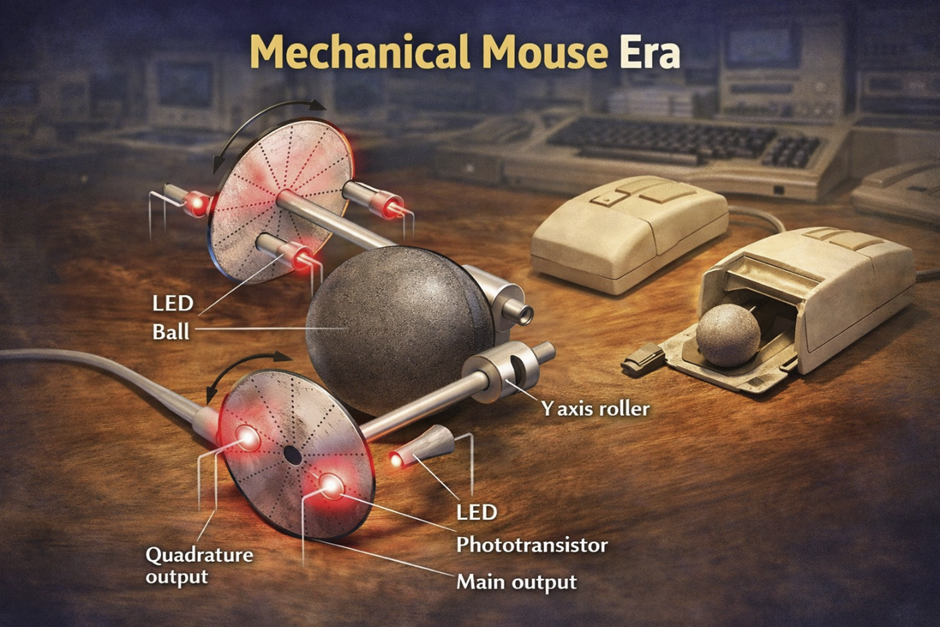
The mechanical mouse era dominated computing from the late 1970s through the 1990s, becoming the standard input device for personal computers worldwide. These devices relied on a rolling rubber or metal ball to detect movement, translating physical motion into digital signals processed by the system’s CPU and processors. During this time, operating systems like Windows and early versions of MacOS were designed around pointer-based navigation, making the mouse essential for interacting with the user interface. Major manufacturers such as IBM, HP, and Microsoft contributed to the refinement and distribution of mechanical mice. This period also coincided with the widespread use of storage media like floppy disks, where efficient navigation became increasingly important. Despite their popularity, mechanical mice had limitations, particularly in terms of maintenance and accuracy. Nevertheless, they played a crucial role in shaping modern computing workflows. Their influence extended into areas like programming and office productivity, where precise control was necessary.
How Ball Mice Functioned Internally
Ball mice operated using a simple yet effective mechanical system centered around a rolling sphere. When the user moved the device, the ball rotated and transferred motion to two internal rollers positioned perpendicular to each other. These rollers detected movement along the X and Y axes, converting physical motion into electrical signals. The signals were then processed by the computer’s internal components, including ram, to move the cursor on the screen. This design allowed for relatively accurate tracking, though it depended heavily on surface quality. The internal components required precise alignment to function correctly. Over time, dust and debris could interfere with the rollers, reducing accuracy. Despite these limitations, the mechanism was innovative for its time and remained widely used for decades.
Advantages and Limitations of Mechanical Mice
Mechanical mice offered several advantages that contributed to their widespread adoption during the 1980s and 1990s. They were relatively inexpensive to produce, making them accessible to a broad range of users. Their design was simple and reliable under normal conditions, providing consistent performance for everyday tasks. However, they also had significant limitations, particularly in terms of maintenance and precision. The reliance on a physical ball meant that dirt and debris could easily affect performance. Compared to modern optical devices, they were less accurate and required more effort to maintain. Despite these drawbacks, they were essential tools in early computing environments. They enabled efficient navigation in systems developed by companies like Microsoft and IBM.
Cleaning and Maintenance Challenges
One of the biggest drawbacks of mechanical mice was the need for regular cleaning and maintenance. The internal rollers would accumulate dust, oil, and debris from surfaces, causing the cursor to move erratically. Users often had to open the mouse and manually clean the ball and rollers to restore functionality. This process was common in offices and computing labs during the 1990s. Maintenance became even more critical in environments dealing with large files and data-intensive tasks, where precision was essential. Over time, this inconvenience led to the development of alternative technologies such as optical sensors. Despite the challenges, users adapted to these maintenance routines as part of everyday computing. This issue ultimately accelerated innovation in input device design.
Popular Brands and Models of the Time
During the mechanical mouse era, several major technology companies produced widely recognized models. Brands such as IBM, HP, and Microsoft released mice that became standard in offices and homes. These devices were often bundled with personal computers, ensuring widespread distribution. Other electronics companies like Sony and Motorola also contributed to the development of peripheral devices. The design of these mice varied, but most followed a similar structure with two or three buttons and a ball mechanism. These models were used across different operating systems, including Linux and early versions of Windows. Their popularity helped establish the mouse as a universal input device.
Evolution of Mouse Design
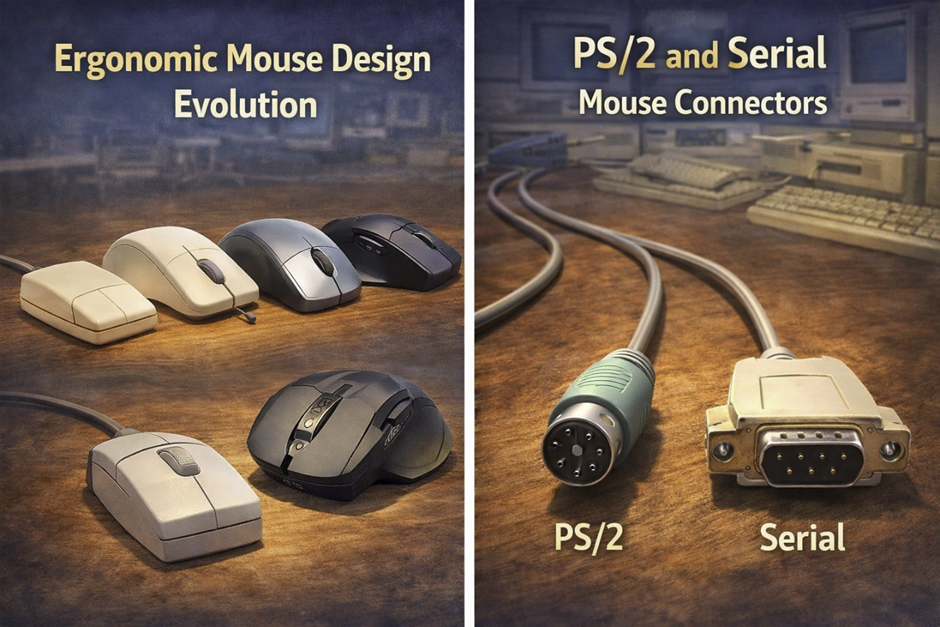
The evolution of mouse design reflects continuous efforts to improve usability, comfort, and functionality. From the 1980s onward, manufacturers began experimenting with shapes and features to enhance the user experience. Ergonomics became a key focus, leading to designs that reduced strain during extended use. Button configurations also evolved, offering more control and flexibility for different applications. The introduction of scroll wheels further improved navigation, especially when working with documents like PDF files. Connectivity options also changed, with devices transitioning from serial ports to PS/2 and later USB interfaces. Companies like Microsoft and Apple played major roles in standardizing these innovations. These design improvements made the mouse more versatile and user-friendly across various computing environments.
Ergonomic Design Beginnings
Ergonomic design became an important consideration in mouse development during the late 1980s and early 1990s. Manufacturers aimed to create shapes that fit naturally in the user’s hand, reducing fatigue and strain. This was especially important for professionals involved in web development and long hours of computer use. Early ergonomic designs introduced curved shapes and textured surfaces for better grip. These improvements helped prevent repetitive strain injuries, which were becoming a concern in office environments. Companies like HP invested in research to improve comfort and usability. Over time, ergonomic principles became standard in mouse design. This focus on user comfort continues to influence modern devices.
Button Configurations (1-button vs 2-button vs 3-button)
Button configurations evolved significantly as the mouse became more widely used. Early models, such as those used in Apple systems, featured a single button for simplicity. In contrast, systems developed by Microsoft and IBM adopted two-button designs to provide additional functionality. Later, three-button mice became common, especially in technical environments using Linux, where middle-click functions were useful. These additional buttons allowed users to perform more actions without relying on the keyboard. This evolution improved efficiency in tasks such as editing and navigation. It also influenced software design, encouraging developers to create applications that utilized multiple input options. Button configuration remains an important aspect of mouse design today.
Introduction of Scroll Wheels
The introduction of the scroll wheel in the mid-1990s was a major advancement in mouse functionality. This feature allowed users to scroll through documents and web pages without using on-screen controls. It significantly improved efficiency when working with long documents or browsing the internet. The scroll wheel quickly became a standard feature in most mice. It was particularly useful in environments involving document editing and data analysis. Companies like Microsoft played a key role in popularizing this innovation. The addition of the scroll wheel enhanced the overall user experience and reduced reliance on other input methods. Today, it remains a core feature of modern mice.
Wired Connectivity (Serial and PS/2 Interfaces)
Early mice connected to computers using serial ports, which were standard in systems during the 1980s. These connections were later replaced by PS/2 interfaces, which provided more reliable communication. The PS/2 port became widely used in personal computers, especially those manufactured by IBM. These wired connections ensured stable data transmission between the mouse and the computer. However, they also limited mobility due to cable restrictions. Despite this limitation, wired mice remained popular for many years. The transition to newer interfaces like USB eventually improved compatibility and performance. This evolution reflects the broader advancement of computer hardware.
The Role of Mouse in Graphical User Interfaces
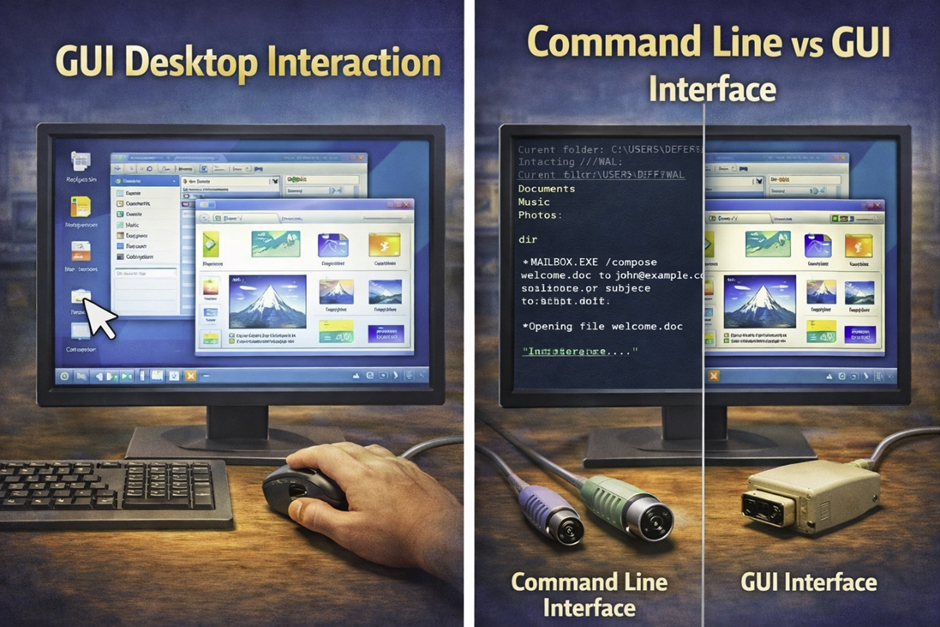
The development of the GUI (Graphical User Interface) transformed the role of the mouse into a central component of computing. Before graphical systems, users relied on text-based commands entered through a keyboard, which required technical knowledge. The GUI introduced visual elements such as windows, icons, and menus, making interaction more intuitive. The mouse became the primary tool for navigating these elements, enabling users to point, click, and drag objects on the screen. Companies like Microsoft and Apple played a significant role in popularizing GUI-based systems. This shift made computers accessible to a wider audience, including non-technical users. The mouse also improved efficiency in tasks such as file management and application navigation. Its integration with the GUI marked a major milestone in computing history.
Relationship Between Mouse and GUI Development
The relationship between the mouse and GUI development is deeply interconnected. The mouse enabled users to interact with graphical elements in a natural and intuitive way. Without the mouse, navigating a GUI would be significantly more difficult. Early systems developed at Xerox PARC demonstrated how these technologies could work together. The mouse allowed users to manipulate objects directly on the screen, improving usability. This interaction model became the foundation for modern operating systems. The development of GUI and mouse technology progressed together, each influencing the other. This synergy continues to shape modern computing environments.
Key GUI Systems That Popularized Mouse Usage
Several key systems played a role in popularizing mouse usage. The Xerox Alto, Apple Lisa, and Macintosh 128K introduced graphical interfaces that relied heavily on the mouse. Later, operating systems like Windows further expanded its use. These systems demonstrated the advantages of visual interaction over command-line interfaces. The mouse became an essential tool for navigating these environments. Companies like Microsoft and Apple invested heavily in GUI development. Their efforts helped establish the mouse as a standard input device. These systems laid the groundwork for modern computing.
Impact on Productivity and User Experience
The introduction of the mouse significantly improved productivity and user experience. Tasks that once required complex commands could now be performed with simple clicks and movements. This made computing more efficient and accessible. The mouse also enabled new types of applications, including design and multimedia tools. It improved workflows in both personal and professional environments. Users could interact with systems more quickly and accurately. This led to increased adoption of computers in various industries. The mouse played a key role in this transformation.
Comparison with Keyboard-Only Interaction
Compared to keyboard-only interaction, the mouse provided a more intuitive and flexible way to interact with computers. Command-line interfaces required users to memorize commands, which could be difficult and time-consuming. The mouse allowed users to navigate visually, reducing the need for technical knowledge. This made computing more accessible to a broader audience. While the keyboard remains important for tasks like typing, the mouse complements it by providing precise control. The combination of both devices offers a balanced and efficient interaction model. This comparison highlights the importance of the mouse in modern computing.
Gaming and Specialized Mice (Early Stage)
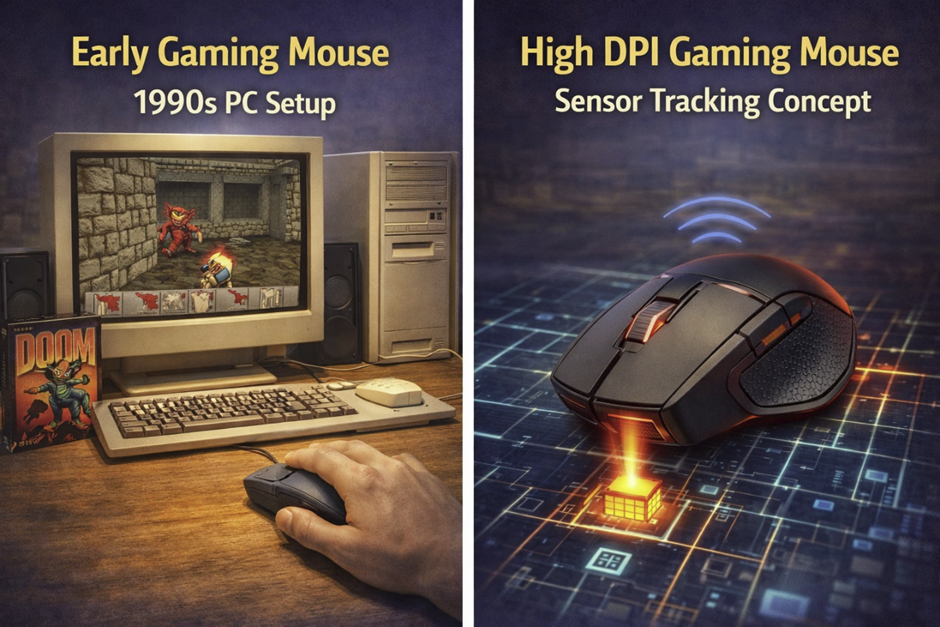
The early stage of gaming and specialized mice began in the 1990s, as computer games became more complex and required precise control. Traditional mechanical mice were adapted to meet the needs of gamers, who demanded higher accuracy and responsiveness. This period saw the emergence of features designed specifically for gaming, such as improved tracking and additional buttons. Companies like Microsoft and hardware manufacturers began exploring ways to enhance mouse performance. The growing popularity of PC gaming created a demand for specialized input devices. These developments also influenced advancements in programming and interactive software design. Early gaming mice laid the foundation for the high-performance devices used today. This era marked the beginning of a new category of input devices.
Early Gaming Needs and Mouse Adaptation
As computer games evolved in the 1990s, players required more precise and responsive controls. The mouse became an essential tool for navigating game environments and controlling characters. Developers began designing games that relied heavily on mouse input. This led to adaptations in mouse design to improve performance. Features such as increased sensitivity and faster response times were introduced. These improvements enhanced the gaming experience and allowed for more complex gameplay. The mouse became a key component in PC gaming setups. This adaptation marked the beginning of specialized gaming devices.
Introduction of Higher Precision Tracking
Higher precision tracking became a priority as gaming demands increased. Manufacturers began improving sensor technology to provide more accurate movement detection. This allowed players to perform precise actions in fast-paced games. The concept of DPI (dots per inch) became an important measure of sensitivity. Higher DPI values enabled smoother and more responsive cursor movement. These advancements improved both gaming and professional applications. The development of precision tracking was a major step forward in mouse technology. It laid the groundwork for modern high-performance devices.
Emergence of Gaming Mouse Concepts
The emergence of gaming mouse concepts in the late 1990s marked the beginning of a new market segment. Manufacturers began designing mice specifically for gaming, with features tailored to performance and customization. These devices often included additional buttons and improved ergonomics. The goal was to provide a competitive advantage for players. Early gaming mice influenced the design of future models. They introduced concepts that are still used in modern devices. This period marked the transition from general-purpose mice to specialized tools. It set the stage for the gaming industry’s rapid growth.
Summary of Part 1
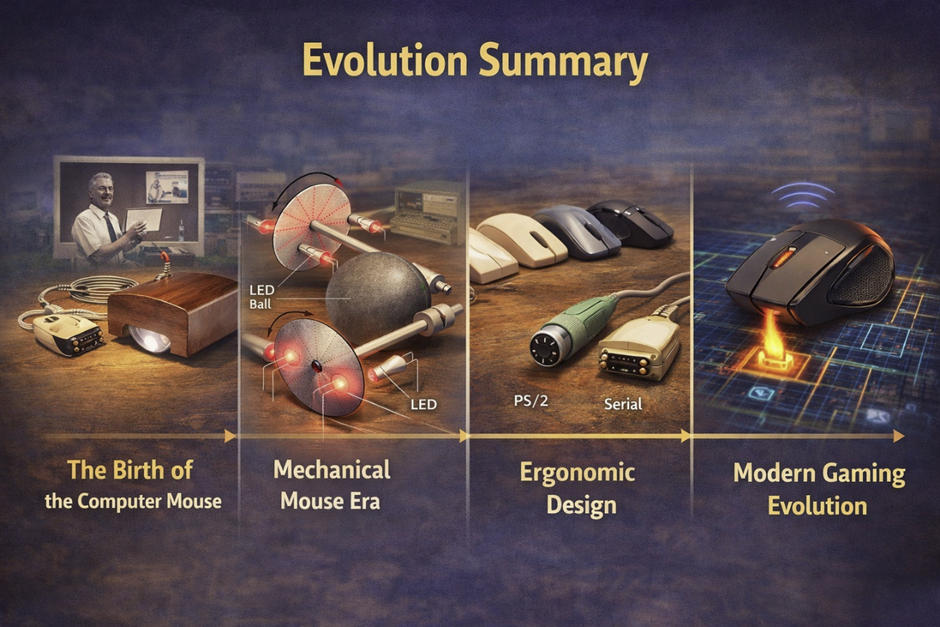
The history of the computer mouse from the 1960s to the 1980s represents a remarkable journey of innovation and transformation. Beginning with the invention by Douglas Engelbart in 1964, the mouse evolved from a simple wooden prototype into a critical component of personal computing. The 1970s introduced mechanical improvements, including ball-based designs that enhanced usability. During the 1980s, the mouse became widely adopted благодаря the rise of the GUI and personal computers developed by companies like Microsoft and Apple. This period also saw advancements in design, connectivity, and functionality. The mouse played a key role in making computers more accessible and efficient. Its development laid the groundwork for future innovations in input devices. This summary highlights the importance of the mouse in shaping modern computing.
Key Milestones from 1960s to 1980s
The key milestones in mouse history span several decades of innovation. The invention in 1964 by Douglas Engelbart marked the beginning of this journey. The 1968 demonstration introduced the technology to the world. The 1970s brought mechanical improvements and increased interest from companies like IBM. The 1980s saw widespread adoption with systems like the Macintosh 128K. These milestones reflect the rapid evolution of the device. Each stage contributed to its development and adoption. This timeline highlights the importance of the mouse in computing history.
Transition from Concept to Mainstream Tool
The transition from concept to mainstream tool occurred gradually over several decades. Initially, the mouse was an experimental device used in research environments. Over time, improvements in design and functionality made it more practical for everyday use. The rise of personal computers accelerated its adoption. Companies like Microsoft and Apple played key roles in this transition. The mouse became a standard component in computing systems. This shift marked a significant change in how people interacted with technology. It transformed the mouse into an essential tool.
Foundation for Future Innovations
The early development of the mouse laid the foundation for future innovations in computing. The concepts introduced during this period influenced the design of modern input devices. Technologies such as optical sensors and wireless connectivity built upon earlier designs. The mouse also played a role in the development of advanced systems, including those involving Artificial Intelligence. Its evolution reflects the broader advancement of technology. The foundation established in the early years continues to shape modern computing. This legacy ensures the mouse remains relevant today.