Complete History of Python Programming Language (1989–Present)
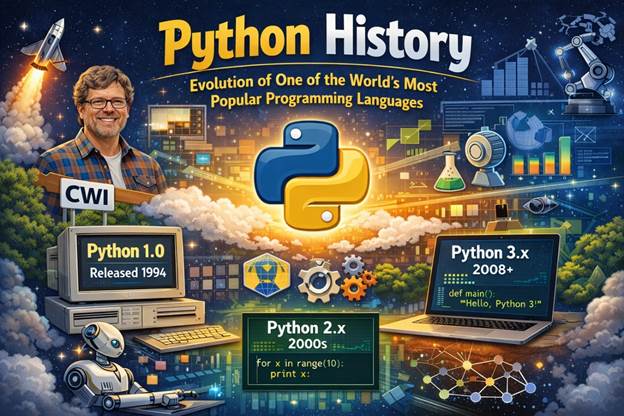
Python is one of the most influential and widely used programming languages in modern computing. Known for its readability, simplicity, and powerful ecosystem, Python has transformed how developers build software, automate tasks, and analyze data.
Created by Guido van Rossum in 1989, Python was designed with the philosophy that code should be easy to read and write. Over the decades, Python has evolved from a small experimental project into a global programming standard used by startups, universities, and large technology companies.
Today Python powers technologies used by companies like Google, Netflix, Instagram, Spotify, and Dropbox.
The language is widely used in:
- Artificial Intelligence
- Data Science
- Web Development
- Automation
- Cybersecurity
- Cloud Computing
This article explores the complete history of Python, its evolution, major versions, adoption by industry, and its growing influence in the technology world.
Introduction to Python
Python is a high-level interpreted programming language designed to emphasize code readability and developer productivity. Unlike many complex programming languages, Python allows programmers to write clear and concise code.
Python supports several programming paradigms including:
- Object-oriented programming
- Functional programming
- Procedural programming
One of Python’s biggest strengths is its extensive standard library, which provides built-in tools for file handling, networking, data processing, and web development.
Python is also platform-independent, meaning applications written in Python can run on Windows, macOS, and Linux without significant modifications.
Who Created Python
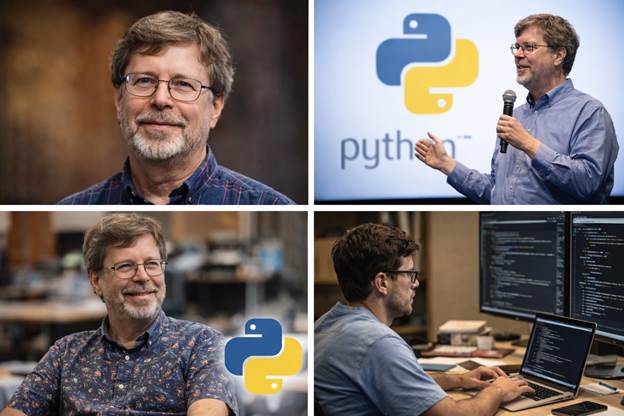
Python was created by Guido van Rossum at the Centrum Wiskunde & Informatica in the Netherlands.
Van Rossum began developing Python during the Christmas holidays of 1989. His goal was to design a programming language that combined simplicity with powerful capabilities.
The name Python was inspired by the British comedy television show Monty Python’s Flying Circus, which van Rossum enjoyed watching.
The first public version of Python, Python 0.9.0, was released in February 1991. Despite being an early version, it already included advanced features such as:
- Classes with inheritance
- Exception handling
- Functions and modules
- Core data types like lists and dictionaries
These features made Python stand out compared to many programming languages of that time.
Early Development of Python (1989–1994)
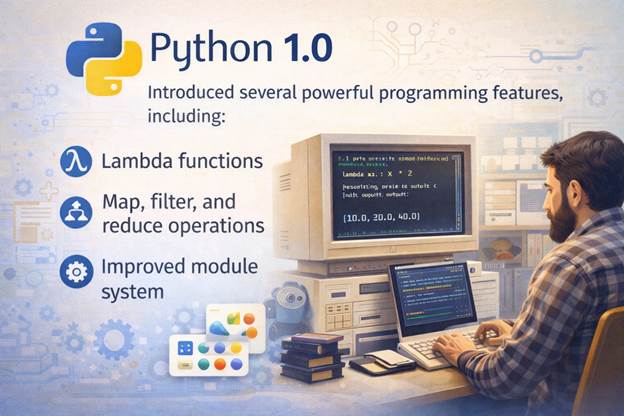
During the early 1990s, Python gained popularity among developers who appreciated its clean syntax and flexibility.
In 1994, Python reached an important milestone with the release of Python 1.0. This version introduced several powerful programming features, including:
- Lambda functions
- Map, filter, and reduce operations
- Improved module system
These features allowed Python to support functional programming techniques, making it attractive for academic research and scientific computing.
Python quickly became popular among researchers, engineers, and educators who needed a language that was both powerful and easy to learn.
Python Version Timeline
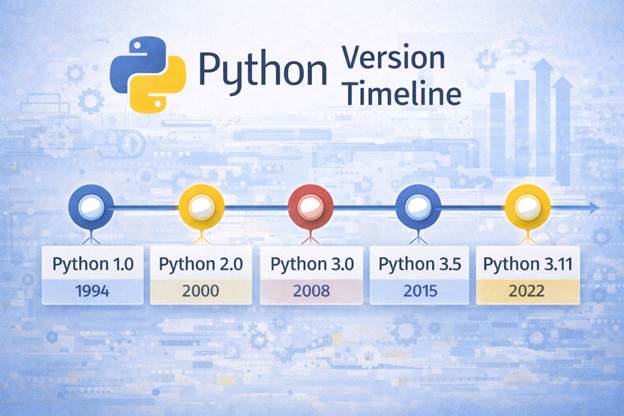
Python has evolved through multiple versions over the past three decades. Each version introduced improvements in performance, syntax, and capabilities.
| Version | Release Year | Major Improvements |
| Python 0.9 | 1991 | First public version |
| Python 1.0 | 1994 | Functional programming tools |
| Python 2.0 | 2000 | Garbage collection and list comprehensions |
| Python 2.7 | 2010 | Final Python 2 version |
| Python 3.0 | 2008 | Major redesign of language |
| Python 3.10 | 2021 | Structural pattern matching |
| Python 3.11 | 2022 | Faster execution and performance improvements |
Python 2 officially reached end-of-life in 2020, encouraging developers worldwide to migrate to Python 3.
Python 2 Era (2000–2010)
The release of Python 2.0 in October 2000 marked a significant step in Python’s evolution. This version introduced many features that modern developers still use today.
Important improvements included:
- Automatic garbage collection
- List comprehensions
- Enhanced Unicode support
During this period, Python began gaining adoption in industry, particularly for web development, automation, and system administration.
Frameworks and tools developed during this time helped establish Python as a practical language for real-world applications.
Python 3 Revolution
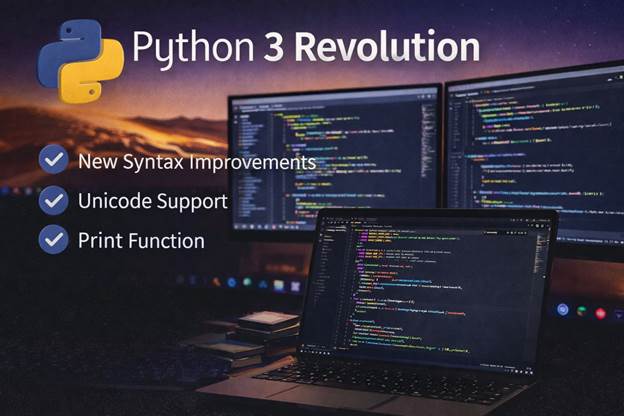
Python 3.0, released in 2008, introduced a major redesign of the language. The goal was to eliminate inconsistencies and modernize the platform.
Key improvements included:
- Better Unicode handling
- Clearer and more consistent syntax
- Improved integer handling
- Updated standard library
Although migration from Python 2 to Python 3 took several years, Python 3 eventually became the official and dominant version of the language.
Python Market Share and Popularity
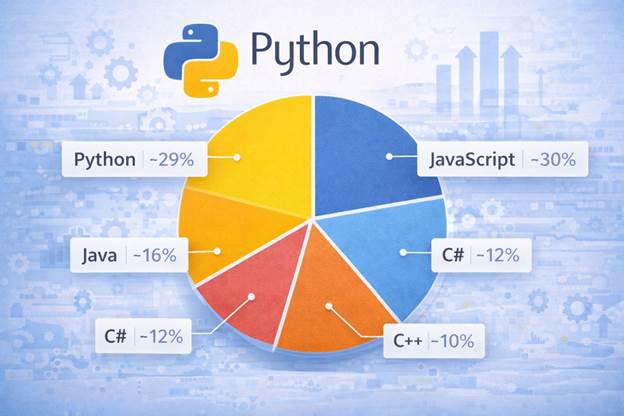
Python is consistently ranked among the top programming languages globally.
Estimated Programming Language Market Share
| Programming Language | Market Share |
| Python | ~29% |
| JavaScript | ~30% |
| Java | ~16% |
| C# | ~12% |
| C++ | ~10% |
Python’s growth is largely driven by its dominance in artificial intelligence, machine learning, and data science.
Python Adoption by Industry
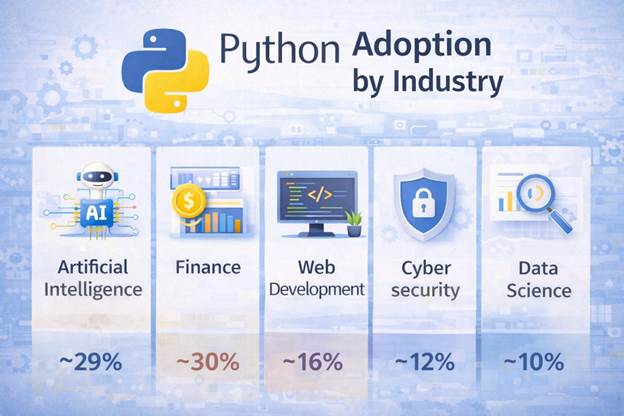
Python is used across many industries because of its flexibility and extensive libraries.
Major industries using Python
| Industry | Example Use |
| Artificial Intelligence | Machine learning models |
| Finance | Algorithmic trading |
| Web Development | Backend web applications |
| Cybersecurity | Security automation |
| Data Science | Data analysis and visualization |
Python’s ecosystem allows developers to build powerful systems quickly and efficiently.
Companies Using Python
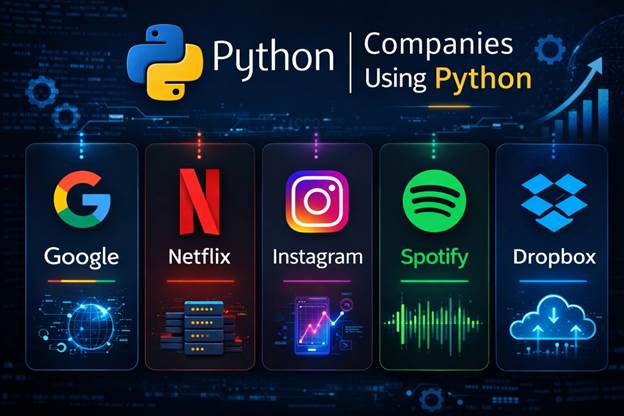
Many leading technology companies rely heavily on Python.
| Company | Use Case |
| Backend services and automation | |
| Netflix | Data processing and analytics |
| Web infrastructure | |
| Spotify | Data analysis |
| Dropbox | Cloud storage infrastructure |
These companies use Python because it enables rapid development and scalable solutions.
Python Ecosystem and Frameworks
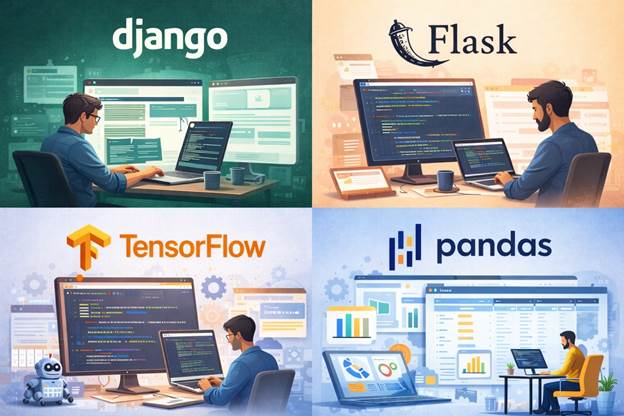
Python’s ecosystem is one of the largest in the programming world.
| Framework / Library | Purpose |
| Django | Full-stack web framework |
| Flask | Lightweight web development |
| TensorFlow | Machine learning |
| Pandas | Data analysis |
| NumPy | Scientific computing |
These frameworks allow Python to dominate areas like data science and machine learning.
Advantages and Limitations of Python
Advantages
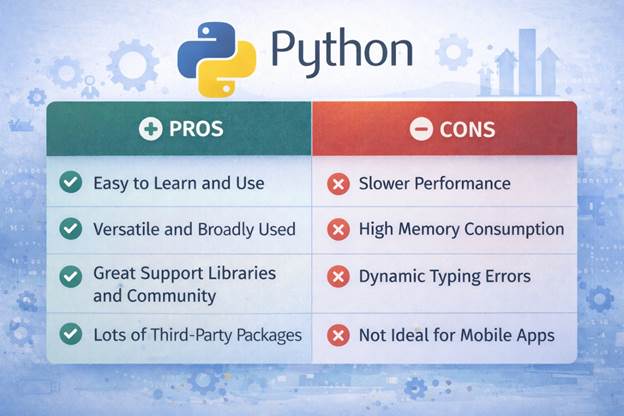
- Easy to learn and use
- Large developer community
- Huge collection of libraries
- Excellent support for AI and data science
Limitations
- Slower execution speed than compiled languages
- Higher memory consumption
- Limited mobile development support
Despite these limitations, Python remains one of the most versatile programming languages available.
Future of Python
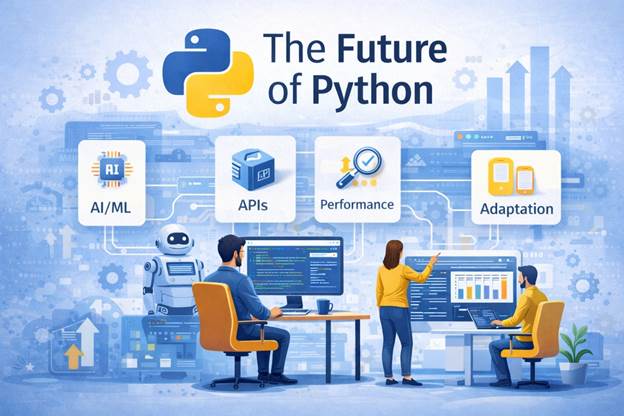
Python’s future looks extremely strong due to its central role in emerging technologies.
Major growth areas include:
- Artificial Intelligence
- Machine Learning
- Automation
- Cloud computing
- Data engineering
Many experts believe Python will remain one of the most important programming languages for decades to come.
Frequently Asked Questions (H2)
When was Python created?
Python was created in 1989 by Guido van Rossum.
Why is Python so popular?
Python is popular because of its simple syntax, powerful libraries, and large developer community.
What is Python mainly used for?
Python is widely used for data science, AI development, web applications, and automation.
Is Python good for beginners?
Yes. Python is considered one of the best programming languages for beginners because of its readability and simplicity.
Conclusion
Python’s journey from a small experimental language in 1989 to a global programming standard demonstrates the power of simplicity and community collaboration. Thanks to its readable syntax, powerful ecosystem, and adaptability, Python continues to shape the future of software development.
As industries increasingly rely on data, automation, and artificial intelligence, Python’s influence is expected to grow even further. For developers, researchers, and businesses alike, Python remains one of the most valuable tools in the modern technology landscape.